
Contact: Crystal Drake, Office of Strategic Communications
In the Renaissance Era, students continue to reach back to Tuskegee’s founding principles as they move forward to uplift their community – case, in point, the ‘Skegee Garden Club’s recent efforts to improve a new community garden, an initiative of The Tuskegee Macon County Community Foundation (TMCCF) as part their “Macon it Happen in Tuskegee” project.
After competing for and earning a $4100 grant from the National Black Food and Justice Alliance (NBFJA), the club built raised beds in the garden through funding from the – continuing to build bridges between Tuskegee University and the surrounding Tuskegee community, blurring the “town and gown” distinctions of both populations, strengthening the overall economic and social ecosystem for all.
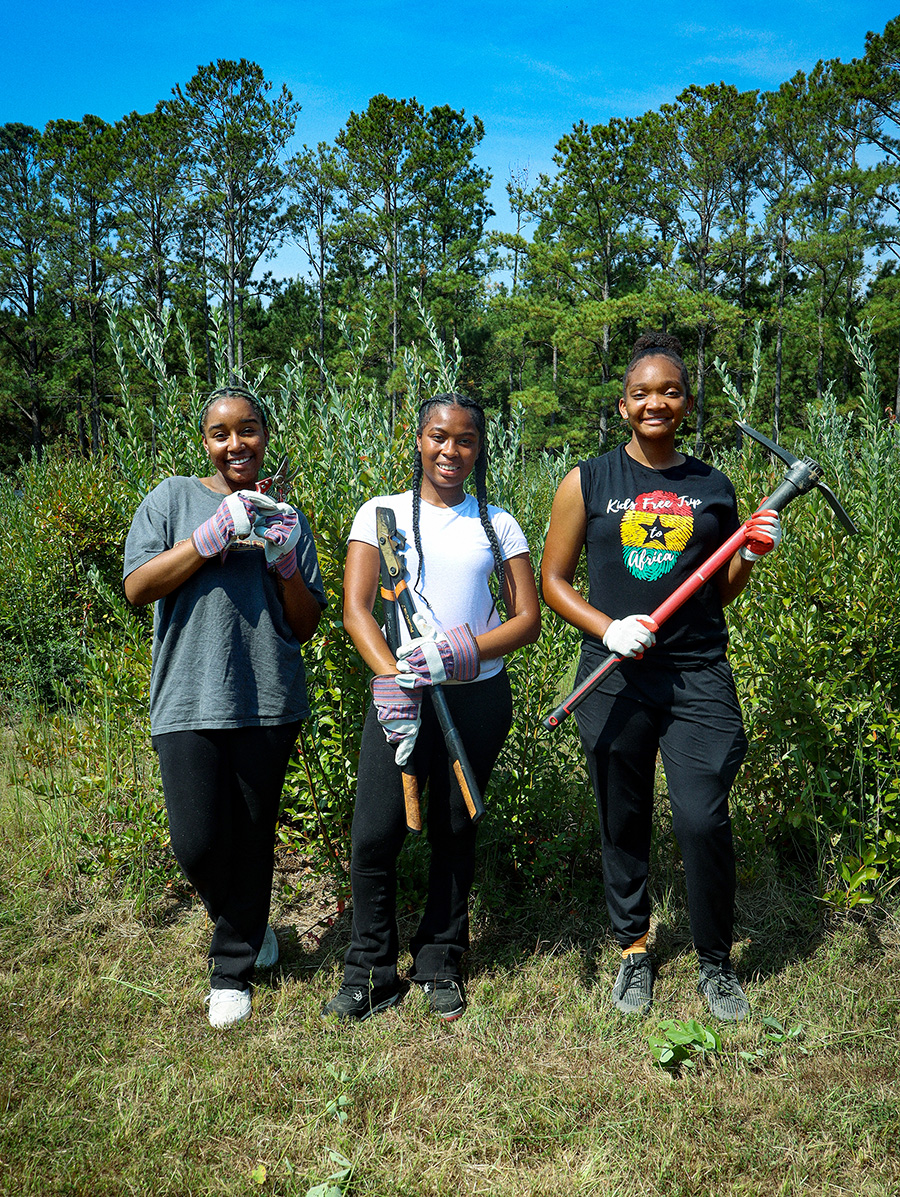
“This funding is a major step forward in our mission to promote food security, expand access to fresh produce, and strengthen local agricultural knowledge within our community,” said Sia Smith, vice president of the ‘Skegee Garden Club.
“Just as students once built the classrooms they learned in, Tuskegee students help run and sustain real services that support the community and their own professional development,” said Dr. Olga Bolden-Tiller, Dean of the College of Agriculture and Nutrition Sciences.
The NBFJA grant will support:
- community workshops
- investment in small infrastructure projects with local partner farms: Shady Grove Blueberry Patch, Harlem Comes to Cotton, and Tuskegee Honey.
- student career development opportunities and professional certifications
- marketing strategies for local farmers
All of these outcomes align tightly with the Tuskegee Renaissance Era’s focus on ensuring students are workforce ready upon graduation and advancing the “head, hand and heart” philosophy of founding principal Booker T. Washington that emphasizes how an education empowers students with practical skills that strengthen their communities.
“George Washington Carver revolutionized the Southern economy through his crop rotation innovation and research, much of which was done at Tuskegee,” said Dr. Bolden-Tiller. “Even more importantly, his focus on restoring self-sufficiency, dignity and healthier and more diverse food options to struggling farmers and their families is the greater hallmark – a legacy showing up today in the great work done by the ‘Skegee Garden Club.”
© 2026 Tuskegee University