We have over 100 student organizations on campus, and Championship sports teams for men and women!
Home
>
2026 Archives
>
Tuskegee Faculty Highlight University’s Architectural Legacy in Smithsonian-Led National Program
TSACS NewsCampus NewsTop News
Tuskegee Faculty Highlight University’s Architectural Legacy in Smithsonian-Led National Program
Crystal Drake30 July 2026
3 minute read
Smithsonian Institution, National Museum of African American History and Culture/Andrew Innerarity.
Contact: Crystal Drake, Office of Strategic Communications
Dr. Kwesi Daniels and Prof. Amma Asamoah of Tuskegee University's School of Architecture and Construction Science (TSACS) recently served as co-presenters for "Brick by Brick: Tuskegee's Legacy of Agriculture and Architecture," the final program of At the Vanguard: Making and Saving History at Historically Black Colleges and Universities, a national exhibition and discussion series organized by the Smithsonian National Museum of African American History and Culture (NMAAHC) and the Smithsonian Institution Traveling Exhibition Service (SITES).
The event highlighted Tuskegee University's contributions to architecture, preservation, and innovation while celebrating the broader impact of HBCUs on American history and culture.
View the event, which included rare archival video of Tuskegee’s campus, here.
At the Vanguard showcases stories of ingenuity, artistry, resilience, and achievement through collections from Clark Atlanta University, Florida A&M University, Jackson State University, Texas Southern University, and Tuskegee University. The exhibition closed on July 19 and will begin a national tour before returning to Tuskegee in early 2028, when it will be displayed at the Tuskegee University Legacy Museum alongside materials from the university's permanent collections.
The program attracted Tuskegee alumni, local architects, former Rosenwald School students, preservation advocates, and community members, reflecting the university's lasting influence on architecture, education, and community development.
For Asamoah, a 2008 graduate of Tuskegee's architecture program and assistant professor of Architecture and Sustainable Design, preserving historic spaces and building for the future are complementary goals.
"I believe the answer is not choosing one over the other," Asamoah said. "We must intentionally integrate these elements into our curriculum just as our founders and pioneers did."
She emphasized that generations of Tuskegee faculty and students not only studied architecture and agriculture but also built the campus and shared their knowledge with surrounding communities.
"We are producers and inventors at Tuskegee, not solely intellectuals," she said. "That is our inheritance."
Dr. Daniels, associate professor and head of the Department of Architecture, noted that Tuskegee's Historic Preservation Program helps students address contemporary challenges while safeguarding a campus recognized as a National Historic Landmark.
"We do not see a distinction between preserving existing infrastructure and creating new buildings," Daniels said. "Instead, we see an opportunity to align ourselves with practices that have been embraced around the world for centuries."
Both faculty members stressed that honoring Tuskegee's architectural legacy requires connecting traditional knowledge with modern innovation. Asamoah described the campus as a "living laboratory" where preservation, education, and creativity coexist.
Daniels also highlighted the pioneering African American architects connected to Tuskegee, including Robert R. Taylor, Wallace A. Rayfield, William Sidney Pittman, Vertner Woodson Tandy, John A. Lankford, and Walter T. Bailey.
"These architects are our pioneers, and it is our responsibility to ensure that their names, contributions, and legacies are remembered," Daniels said.
Looking ahead to the exhibition's arrival at the Tuskegee University Legacy Museum in 2028, TSACS faculty plan to support programming through lectures, tours, and educational experiences. Asamoah said future programming may incorporate Daniels' research on Robert R. Taylor and her collaborative research with Yale University focused on clay-based pigments inspired by George Washington Carver's work.
"Our TSACS students continue a tradition of excellence that has endured for more than 130 years," Daniels said. "As we move forward, we remain committed to preserving our history, honoring our pioneers, and preparing future generations to build on the remarkable legacy of Tuskegee University and its architecture."


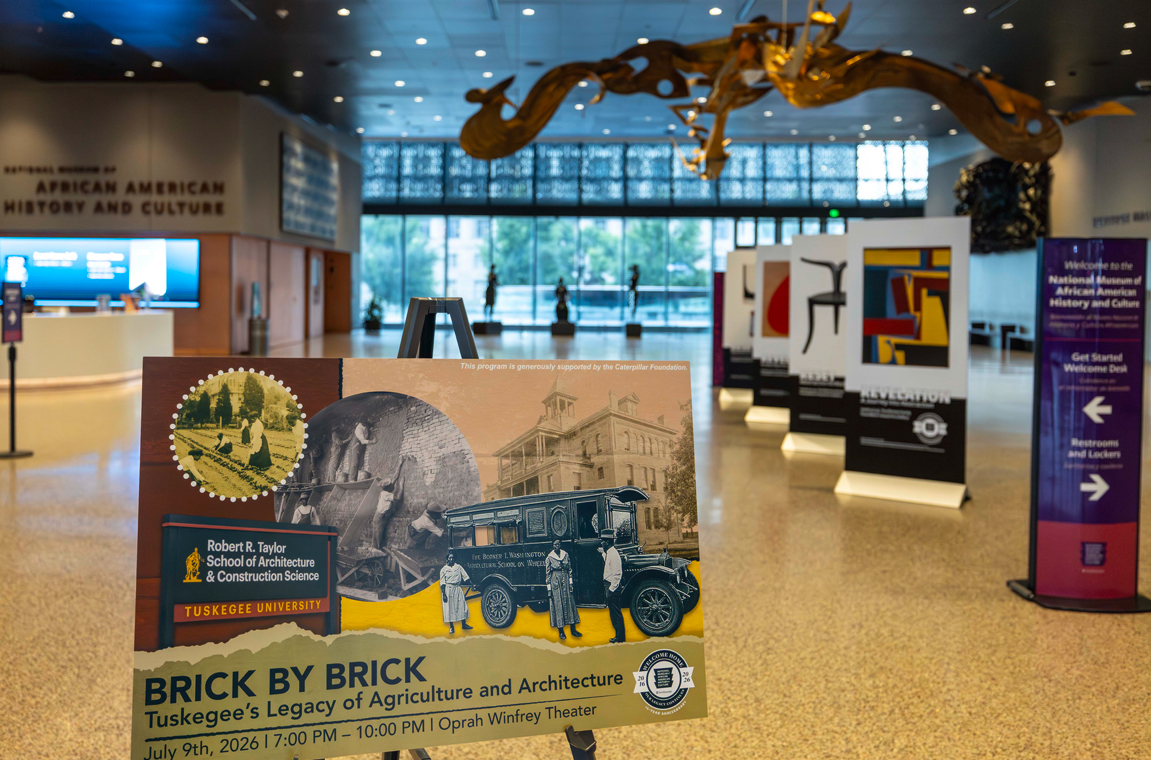
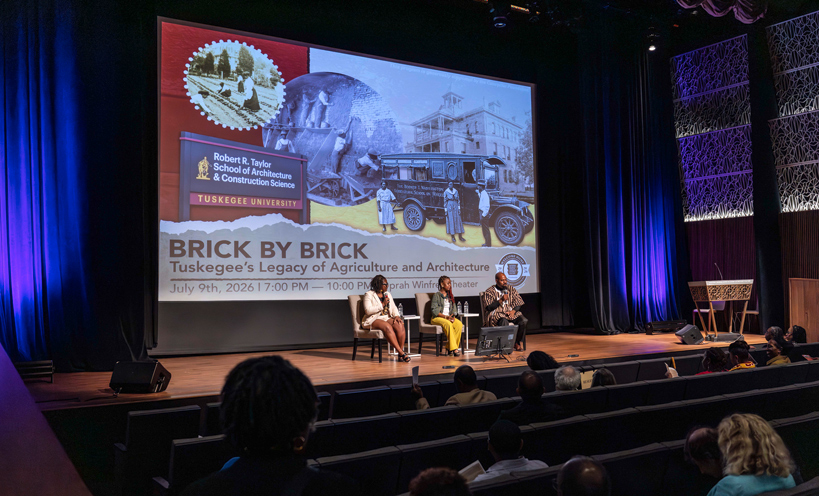 The event highlighted Tuskegee University's contributions to architecture, preservation, and innovation while celebrating the broader impact of HBCUs on American history and culture.
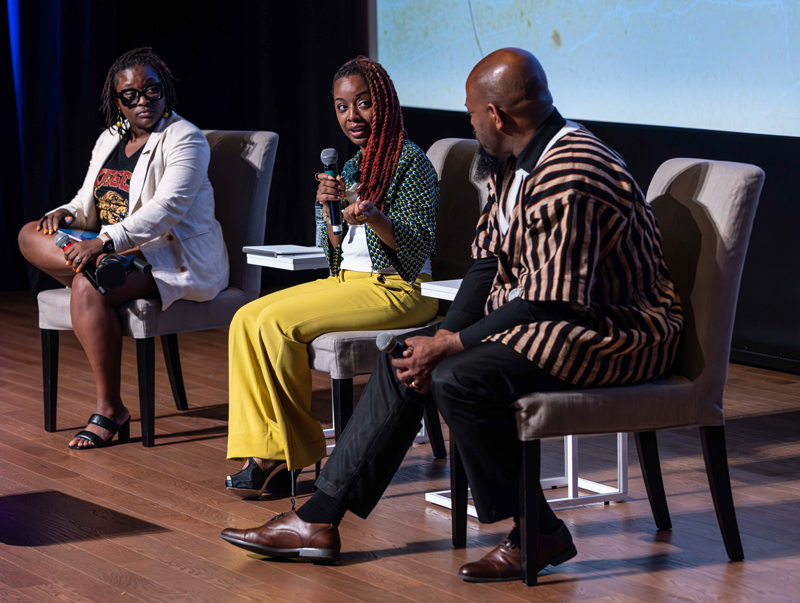 "I believe the answer is not choosing one over the other," Asamoah said. "We must intentionally integrate these elements into our curriculum just as our founders and pioneers did."