Contact: Crystal Drake, Office of Strategic Communications
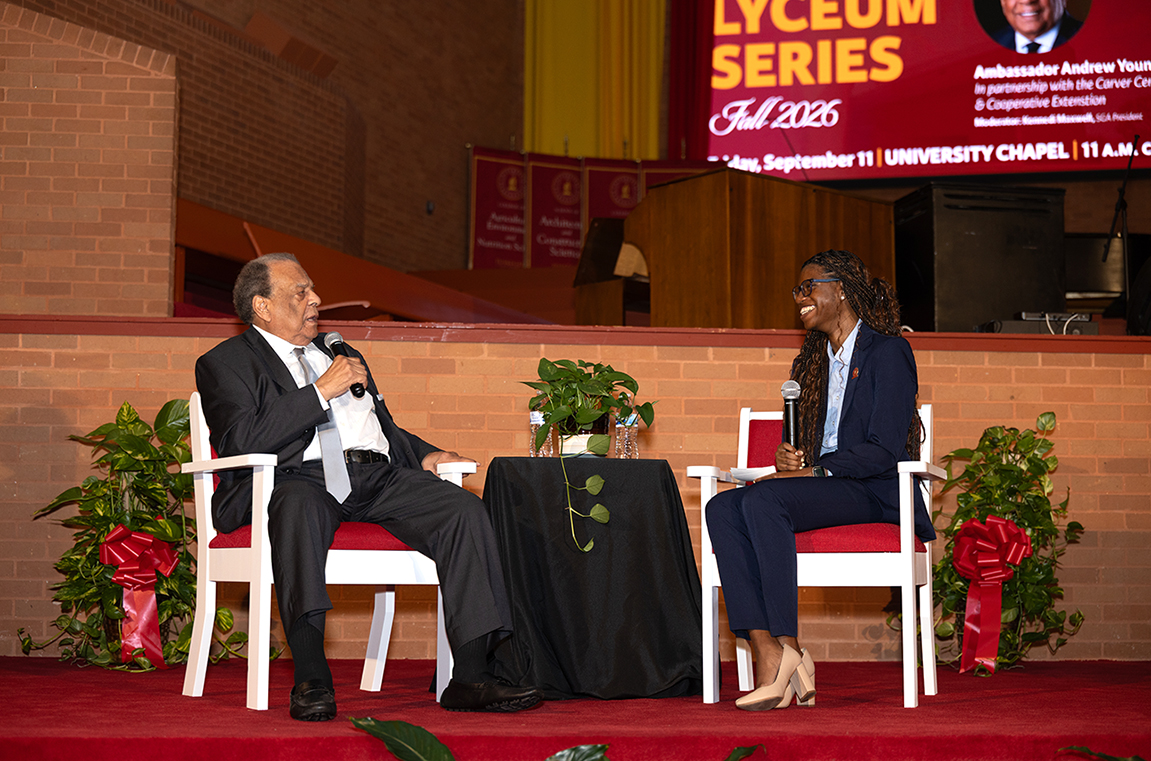
Earlier this month, Tuskegee University launched its 2026-2027 Lyceum Series,
Reliving the Black Renaissance: Celebrating History, Culture and Dialogue through Voices that Inspire, with renowned civil rights icon, former congressman, diplomat, and philanthropist Ambassador Andrew J. Young.
The University Chapel was nearly at full capacity for an in-depth conversation, moderated by Kennedi Maxwell, Student Government Association president, that found Ambassador Young focused on the power of connection that is often not immediately understood in the moments where lives and legacy link together.
Throughout his distinguished career as a minister, civil rights leader, congressman, ambassador, mayor, and philanthropist, Ambassador Young has built a legacy of connection, defined by advocacy, service, and a commitment to expanding opportunities for future generations.
“Tuskegee has been very important in my life,” said Ambassador Young as he explained how he didn’t realize it at the time.
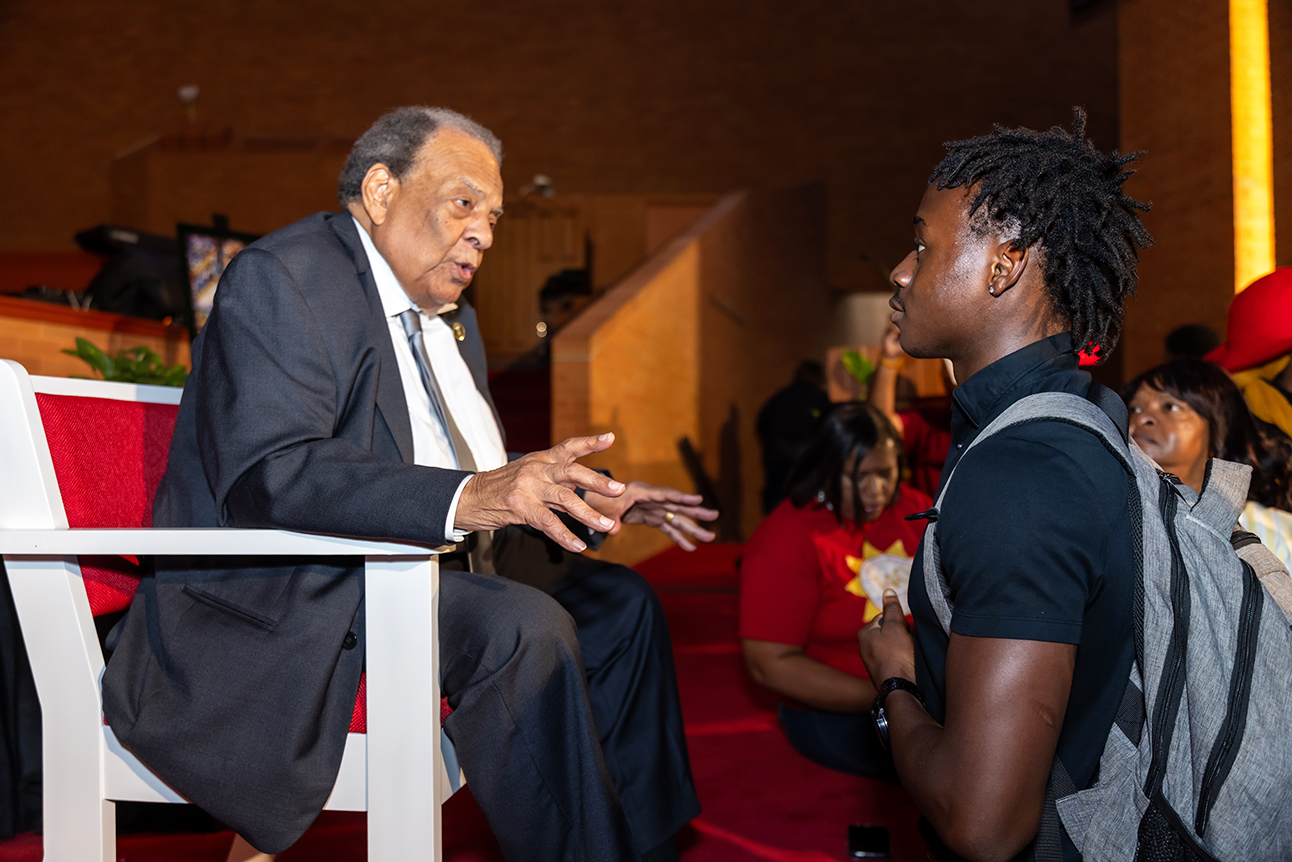
“I knew of the work of Dr. George Washington Carver because my father had friends who worked with him,” he said. But it was a student of Dr. Carver’s – Amelia Boynton Robinson ‘27 – that made his point about the ways that the crossing paths of time impact people.
Ambassador Young recalled a trip with his future wife to Marion, Alabama, her hometown. On the way, they stopped in Selma and through an acquaintance met, Robinson. Several years later, Ambassador Young found himself seeking history-making guidance from her, who by that time had become a powerful connector of people and an influential force within the Civil Rights Movement. She introduced the Selma voting rights strategy to Dr. Martin Luther King, Jr. in meetings with him and other leaders of the Southern Christian Leadership Conference (SCLC), including Ambassador Young. They joined Robinson for the voting rights marches in Selma, all marked by severe violence at the hands of Alabama law enforcement.
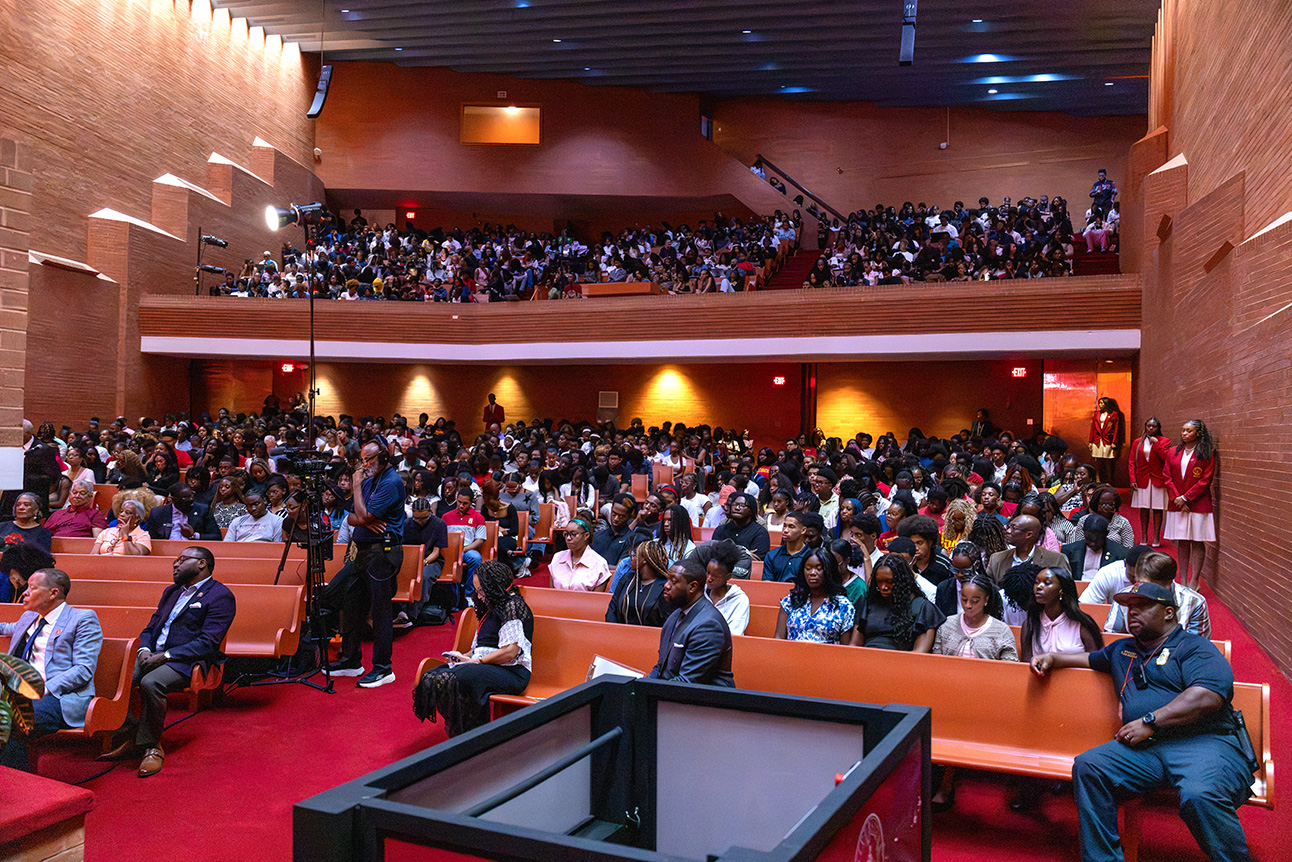
“I want you to know Amelia Boynton Robinson,” he said to students. “She brought the Selma Civil Rights Movement to Dr. King,” he said. “She ran the Black Belt of Alabama in a quiet spiritual, nonviolent way.” He pointed out that for the students, as it was for him, “even as current events unfold, whether we know it or not, we’re being led to a higher purpose.”
He reminded students that further back in history, young people their ages – The Tuskegee Airmen – “changed the world and saved democracy.”
Ambassador Young then challenged Tuskegee students to use their education to take up that mantle. “You are not here just to get a degree. You are here to make this world make sense for all God’s children.”
The event marked the opening of this semester’s Lyceum Engagement Series, an initiative designed to provide students, faculty, and the broader community with opportunities to engage in meaningful dialogue with influential academic, cultural, business, and political leaders. The Lyceum Series was relaunched in fall 2025 to reestablish a dedicated forum for intellectual engagement and dialogue on campus.
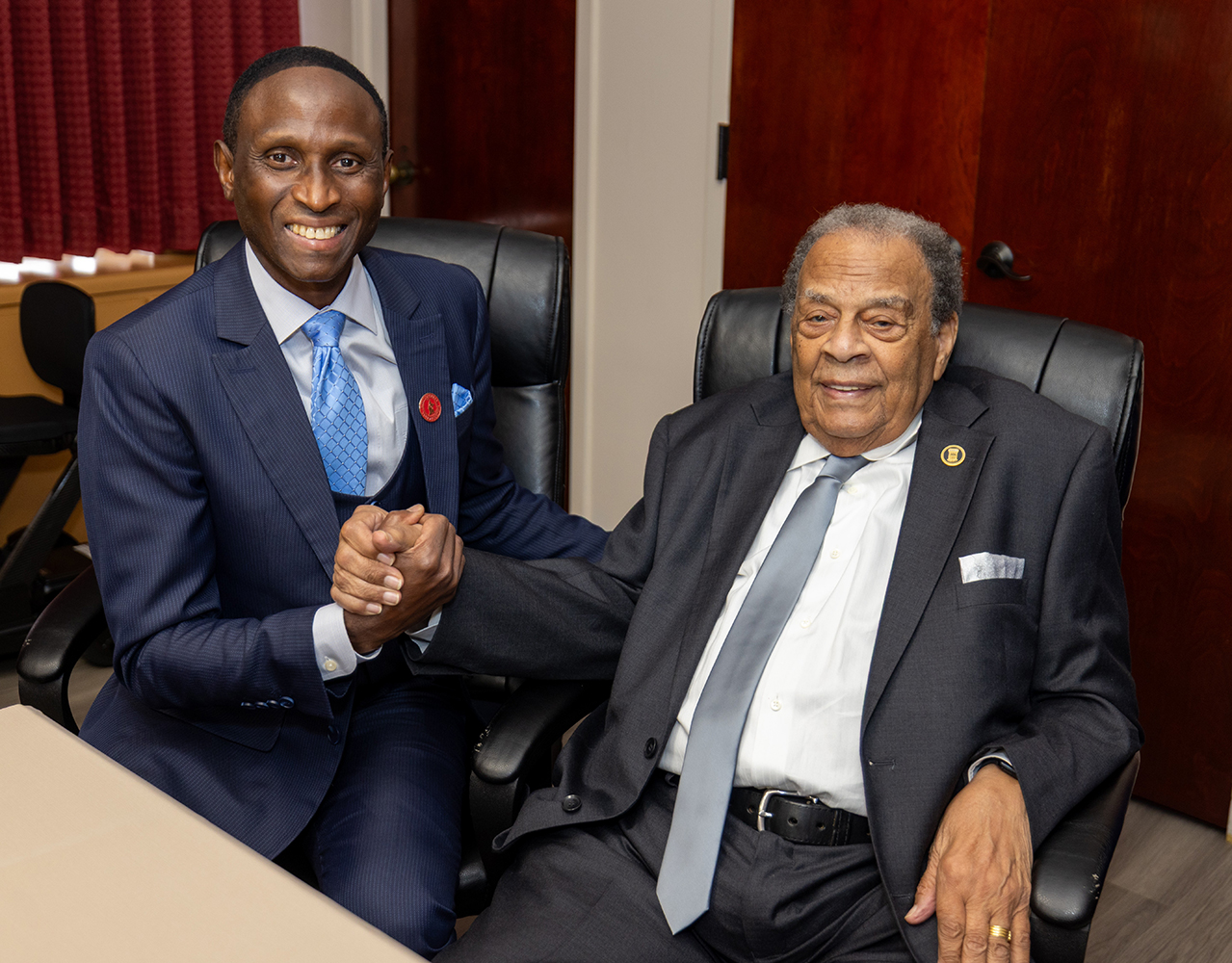
“Through the Lyceum Engagement Series, Tuskegee reaffirms its commitment to intellectual inquiry and civic engagement by connecting our students and the broader community with distinguished voices whose experiences inspire critical thinking and informed leadership,” said Dr. Thierno Thiam, Provost and Senior Vice President for Academic Affairs.
© 2026 Tuskegee University