Contact: Crystal Drake, Office of Strategic Communications
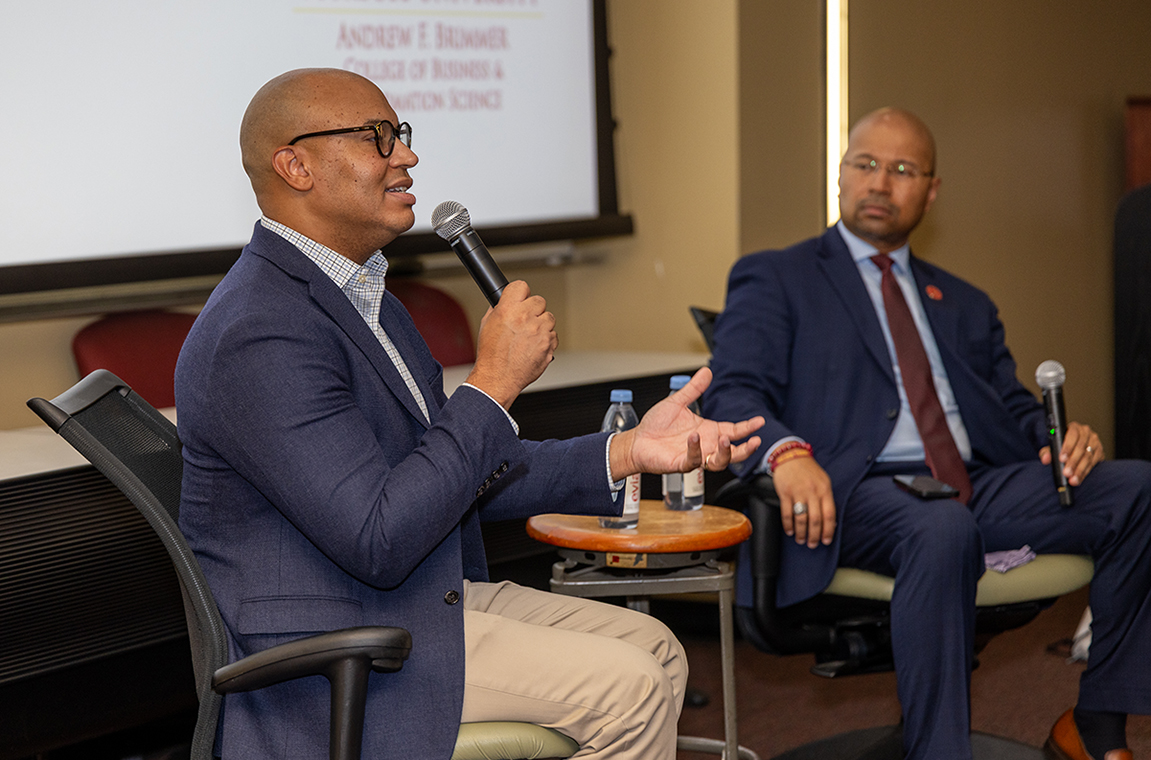
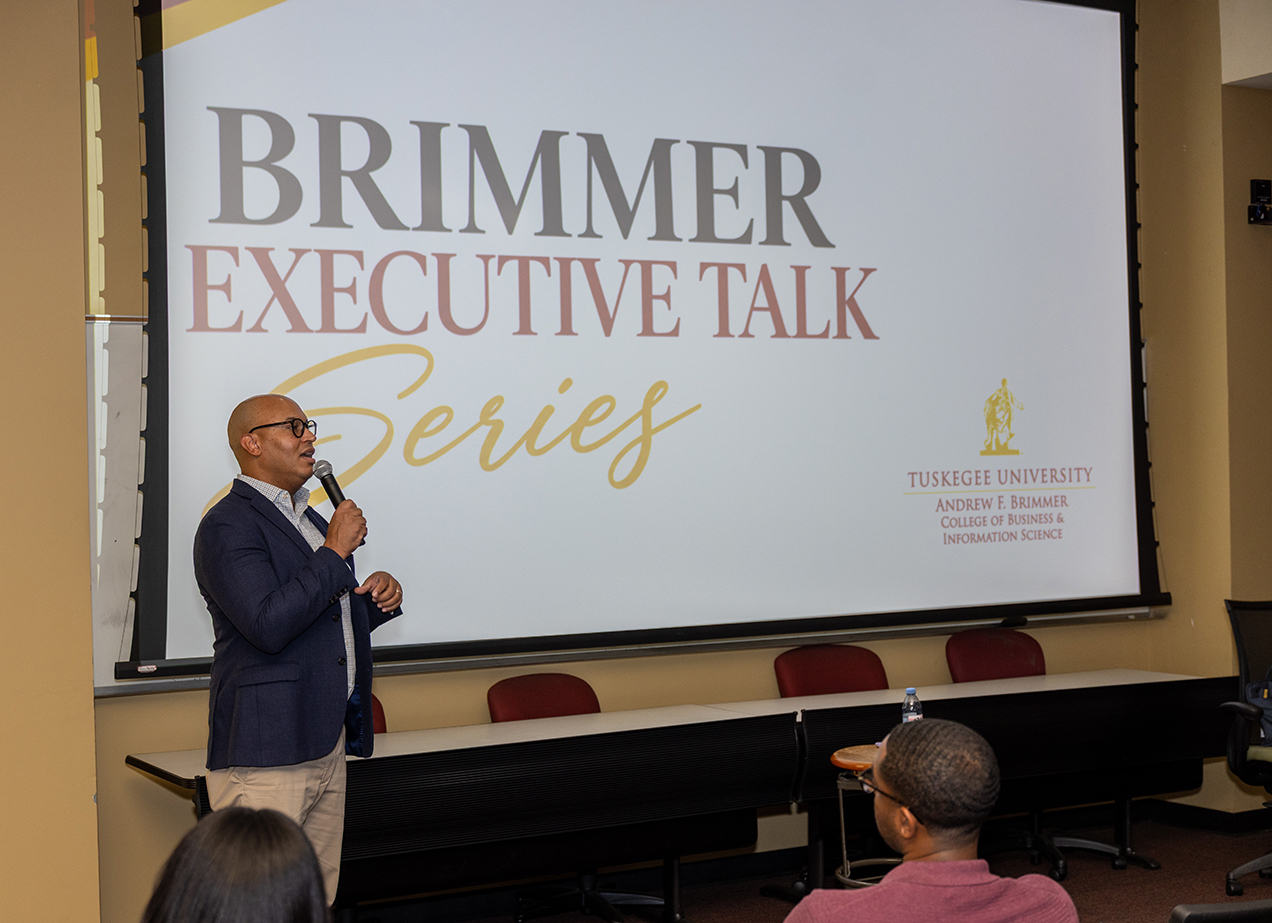
The Tuskegee University College of Business and Information Science recently launched the inaugural session of the Brimmer Executive Talks Series (BETS), a new initiative designed to bring accomplished business leaders and innovators to campus to inspire, educate, and engage the next generation of leaders.
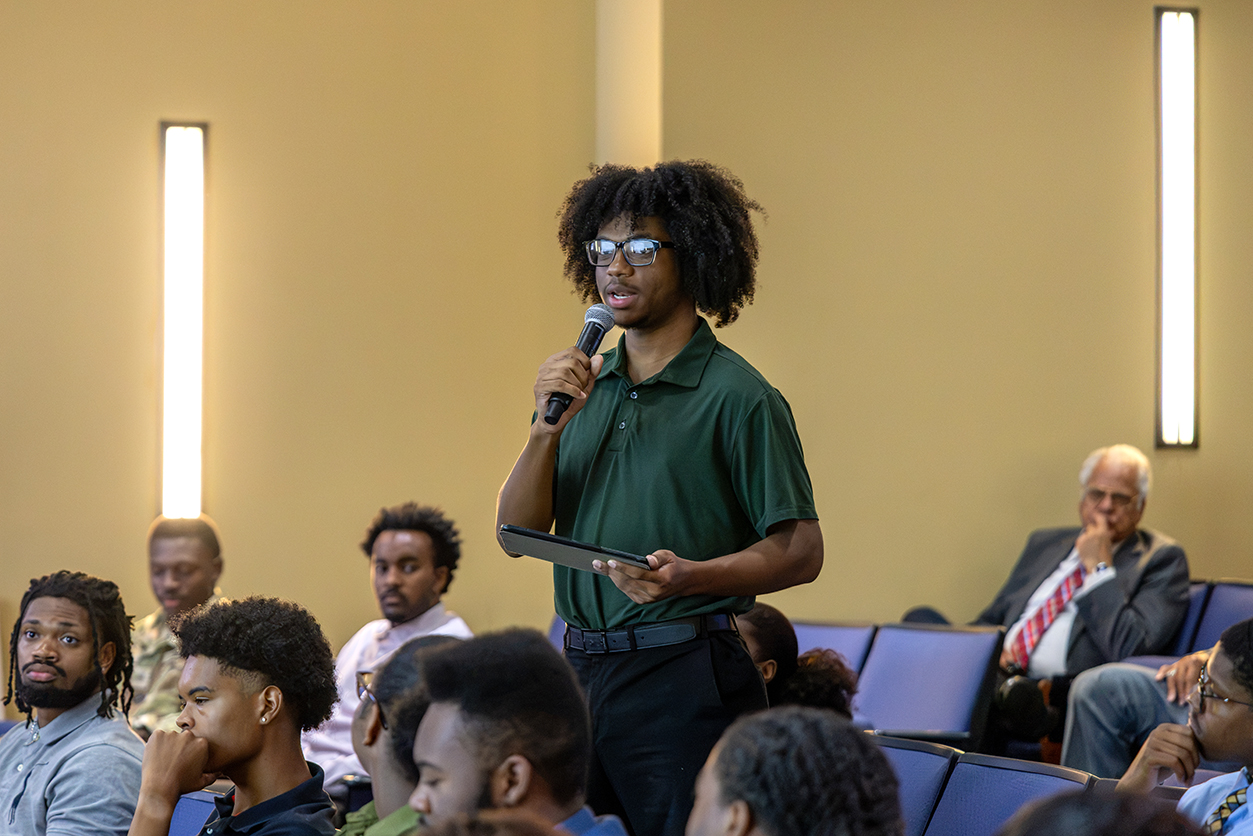
The first BETS event featured Carrington M. Carter, Co-founder and General Partner of East Chop Capital (ECC), in a conversation with Dr. Sean Rogers, Dean of the Andrew F. Brimmer College of Business and Information Science, followed by a Q&A session with students.
Carter shared lessons from his professional journey, which spans a decade in pharmaceutical marketing with Bristol-Myers Squibb and Abbott Laboratories before transitioning into entrepreneurship and private equity. He discussed how those experiences helped prepare him to co-found East Chop Capital, a private equity firm established in 2018 with Calvin L. Butts Jr.
East Chop Capital was founded on the principle that collective action and shared resources can create opportunities that individuals often cannot achieve alone. The firm's mission is rooted in addressing one of the greatest barriers facing entrepreneurs and communities of color: access to capital.
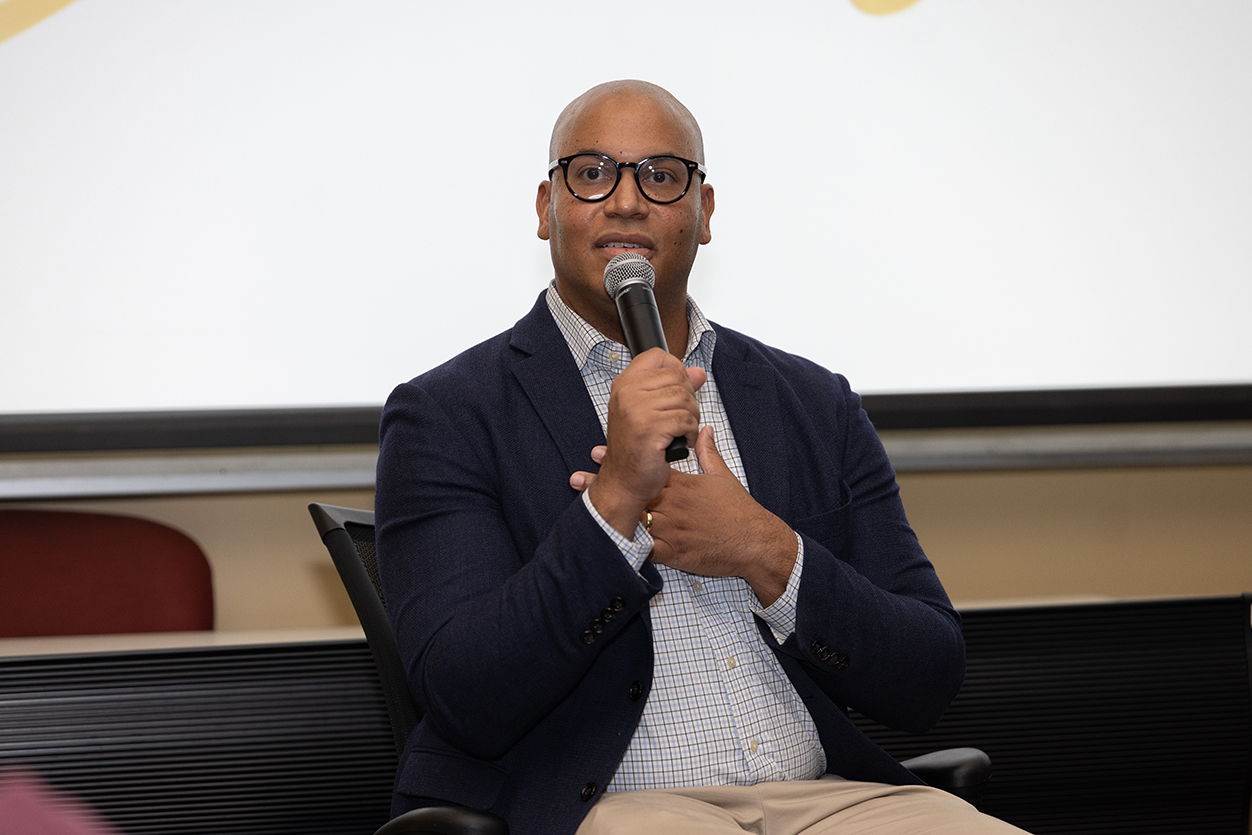
"Friends and family are typically the first place you go to raise capital, and most of us don't have that circle. No one is coming to save us," Carter told students about what it will take for them to generate sustained wealth.
As Tuskegee’s Renaissance Era continues to draw from its founding mission to address modern realities, Carter noted that Booker T. Washington’s sharp focus on creating pathways to economic empowerment and his mission to educate Black people to excel in work that would make them self-sufficient, is the same idea that drives much of his work.
"Booker T. Washington and George Washington Carver, their names are known all over the world, and I consider it a privilege and obligation to support the next generation," Carter said.
He also shared that a very important connection to Tuskegee is his grandfather, a Tuskegee graduate in the early 1940s, from Andalusia, Alabama.
Beyond its historic significance, Carter expressed enthusiasm about the future of the city and surrounding community.
Carter explained that beyond the gains to be had, investment opportunities in the city of Tuskegee by people who know and respect the history here are deeply personal for him. “We need a safe space, where we can have joy, have freedom," he said, growing visibly moved by something very personal.
Dr. Rogers, who joined Tuskegee University in July, echoed Carter's appreciation for the institution's unique ability to attract leaders committed to creating lasting change.
"There is something that draws you here. There is a pull to be a part of the future-focused work that has always been Tuskegee's legacy," Dr. Rogers said.
Reflecting on his transition from corporate executive to entrepreneur, Carter encouraged students to maximize every opportunity as emerging professionals.
"Be a student of the game," he said. "From the moment you get the job or internships, think of it as a training ground. Immerse yourself in learning the industry, be eager to take on stretch assignments, and learn from everyone around you."
At the same time, he stressed the realities of the hard work ahead.
"Business is a contact sport," Carter said. "You must be able to figure things out. Exercise that muscle of figuring things out under pressure."
Dr. Rogers noted that employers consistently emphasize the importance of graduates arriving prepared to contribute immediately.
“I’m in regular communication with industry leaders, from Google to Goldman Sachs. More and more, they want to know how new hires can add value early on. The learning-to-performing period has accelerated nowadays, especially in an age of AI.” he said.
Addressing the growing role of artificial intelligence and emerging technologies, Carter acknowledged the advantages these tools provide but emphasized that technology cannot replace preparation, expertise, and hard work.
"You can't just fake it until you make it. You have to know your stuff," he told students.
He challenged attendees to “swing for the fences” and pursue ambitious goals.
"It takes the same amount of energy and effort to raise $1 million as it does to raise $10 million," Carter said. "Aim higher."
© 2026 Tuskegee University