Contact: Crystal Drake, Office of Strategic Communications
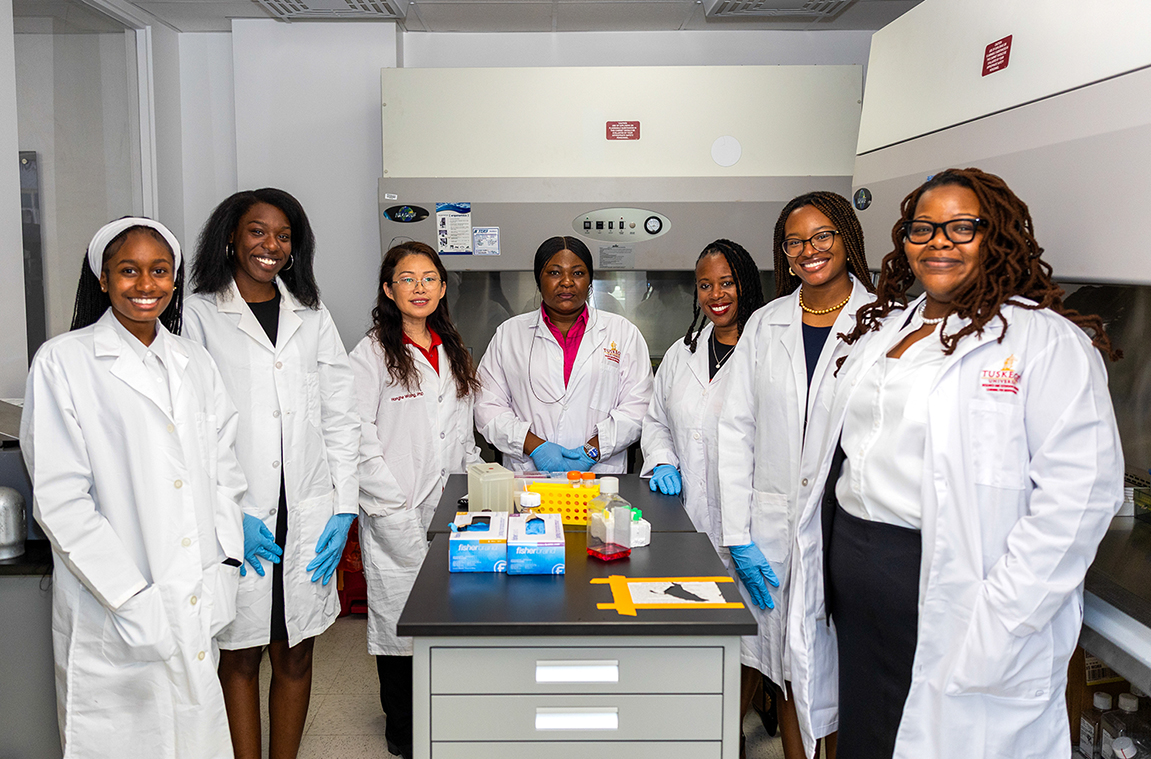
Tuskegee University’s College of Arts and Sciences has been awarded a four-year, $595,217 grant from the Sherman Fairchild Foundation to transform undergraduate science education through a comprehensive modernization of its Biology and Chemistry teaching laboratories.
The grant will fund Interdisciplinary Nurturing of Sciences through Instrumentation, Research, and Engagement at Tuskegee University (INSPIRE-TU), an innovative initiative designed to integrate contemporary scientific instrumentation, inquiry-based instruction, course-based undergraduate research experiences, and data science applications into introductory laboratory courses.
The investment aligns with Tuskegee University’s ongoing Renaissance Era vision of reimagining and revitalizing historic campus spaces to support modern teaching, learning, and innovation. It also reinforces the university’s longstanding mission of preparing students to become leaders in an increasingly competitive and technology-driven workforce.
“This investment represents more than a renovation of laboratories,” said Dr. Channa Prakash, Dean of the College of Arts and Sciences and principal investigator for the project. “It is a strategic investment in student success, academic excellence, and workforce readiness. By providing students with access to modern technologies and authentic research experiences, we are creating opportunities that will prepare them to excel in graduate programs and high-demand careers across STEM fields.”
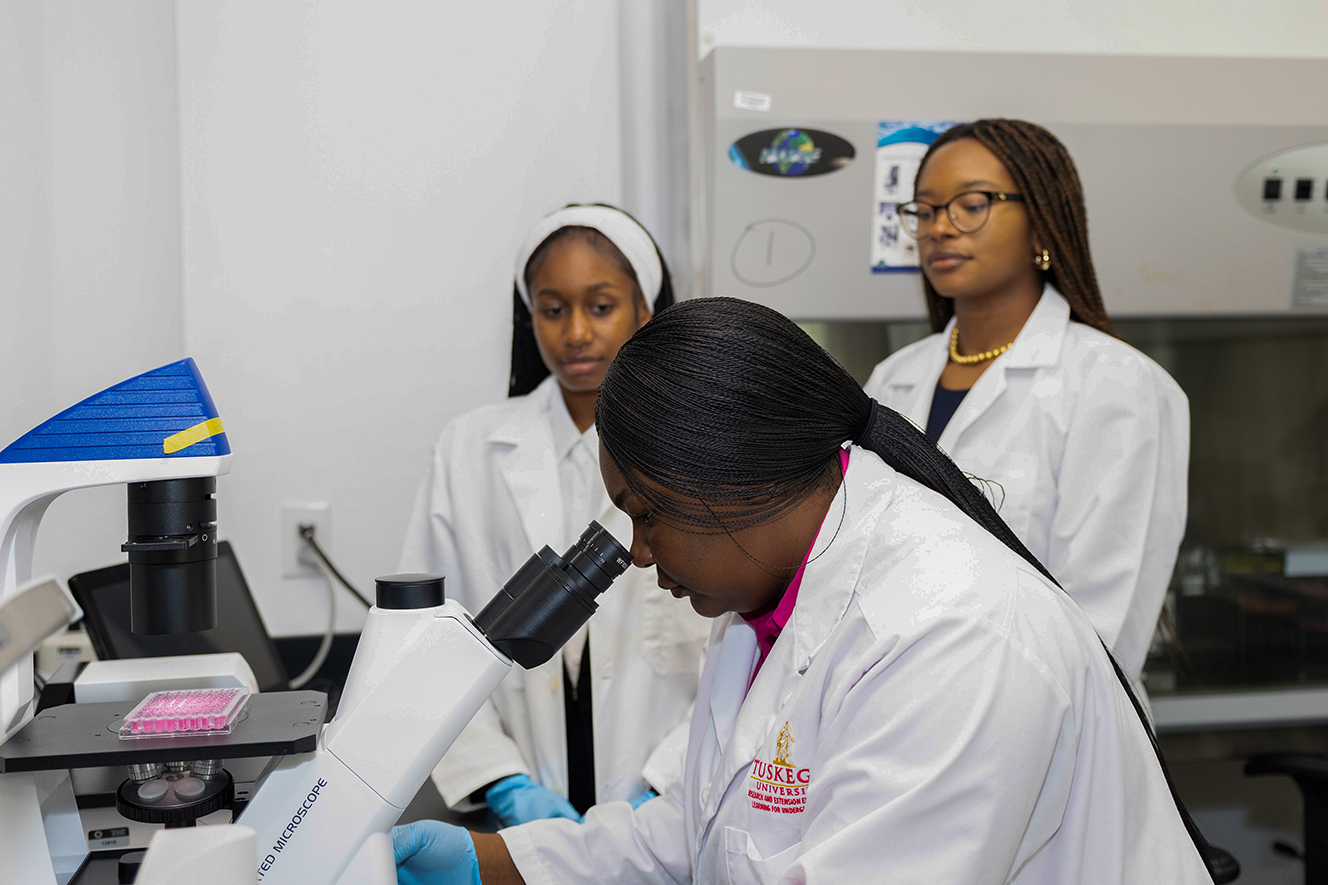
Dr. Prakash leads the INSPIRE-TU initiative in collaboration with Dr. Honghe Wang and Dr. Chastity Bradford from the Department of Biology and Dr. Mohamed O. Abdalla from the Department of Chemistry, who worked together to design the laboratory transformation. Additional contributions were provided by Dr. Melissa Reeves and Dr. David Baah, while Dr. Mohammed Qazi, Dr. Sherrita Fagbodun, and Dr. Tianxin Zhang will support project implementation and evaluation.
The redesigned Biology laboratories will provide students with hands-on, research-focused learning experiences that move beyond traditional laboratory exercises. Students will investigate scientific questions, collect and analyze data using modern instrumentation, and develop critical research and data-analysis skills that mirror real-world scientific practice.
Similarly, Chemistry laboratory courses will transition from predetermined experiments to more engaging, research-centered experiences. Under Dr. Abdalla’s modernization plan, first-year students will gain exposure to advanced analytical instruments and participate in research-based capstone projects that connect foundational chemistry concepts with practical scientific challenges.
Through INSPIRE-TU, students will engage in collaborative research projects focused on authentic scientific problems. The revised curriculum will emphasize not only what students know, but also their ability to apply, analyze, create, and solve problems using that knowledge—skills that are increasingly recognized as essential indicators of workforce readiness and career success.
Importantly, the initiative will impact students across the university’s STEM disciplines, expanding access to research opportunities and cutting-edge technologies for both first-year and upper-class students.
“By introducing modern instrumentation, research practices, and data analysis early in the undergraduate curriculum, INSPIRE-TU aims to strengthen scientific understanding, critical thinking, technical proficiency, confidence, STEM retention, and preparation for graduate education and careers in science, technology, and health-related fields,” Dr. Prakash said.
As Tuskegee University continues to advance its Renaissance Era vision, the INSPIRE-TU project represents another significant step toward creating transformative learning environments that honor the institution’s historic legacy while equipping students with the tools and experiences needed to thrive in the future. Through modernized infrastructure, innovative teaching methods, and expanded research opportunities, the grant will help ensure that Tuskegee students remain competitive, capable, and prepared to lead in the global STEM workforce.
© 2026 Tuskegee University