Contact: Crystal Drake, Office of Strategic Communications
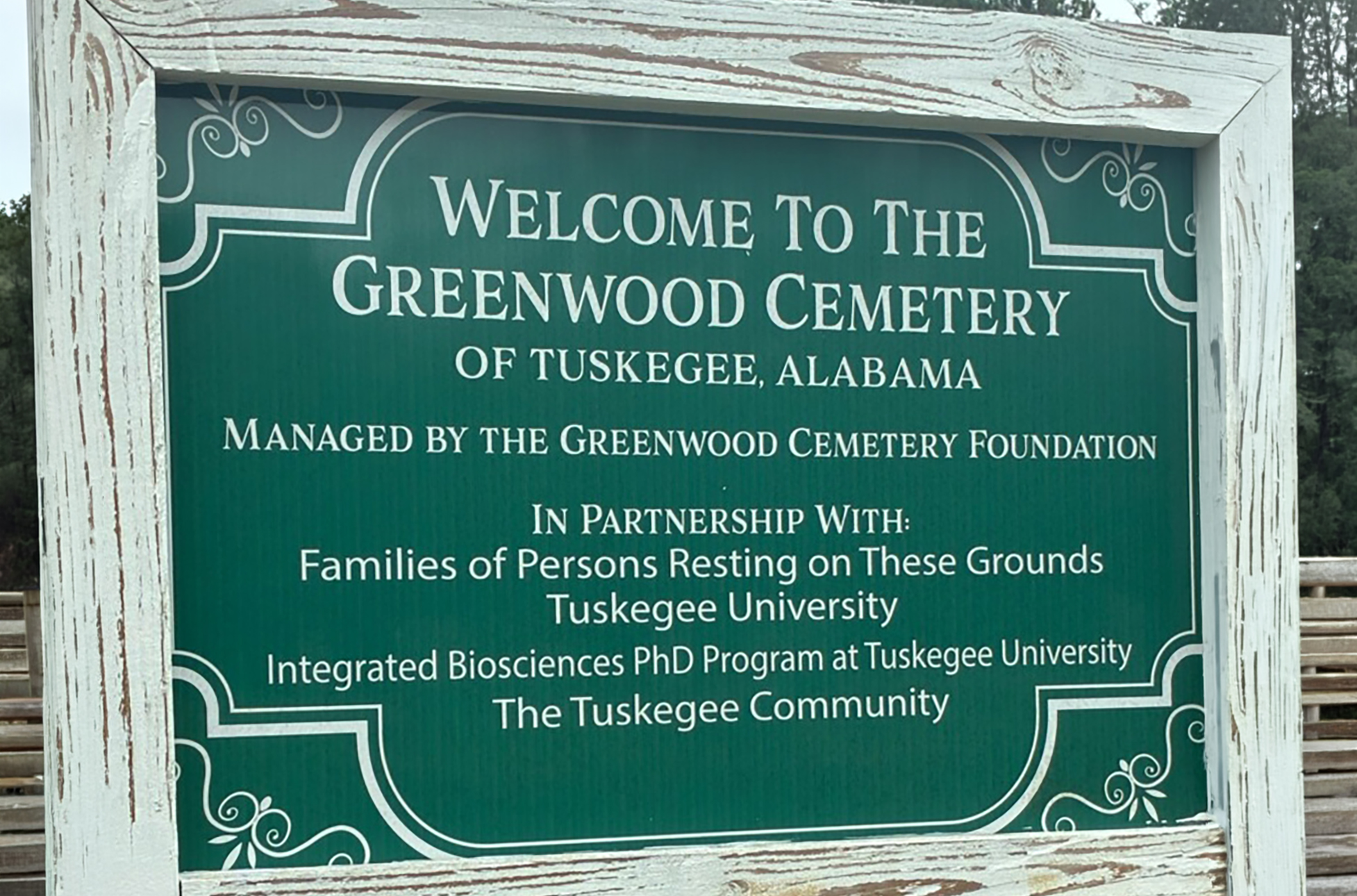
Student volunteers from Tuskegee University’s Integrative Biosciences (IBS) Ph.D. Program recently continued a decade-long commitment to preserving one of Macon County’s most significant historic landmarks by updating and maintaining a comprehensive database documenting more than 3,500 gravesites at Greenwood Cemetery, a sacred site that has served the Tuskegee community since the 1800s.
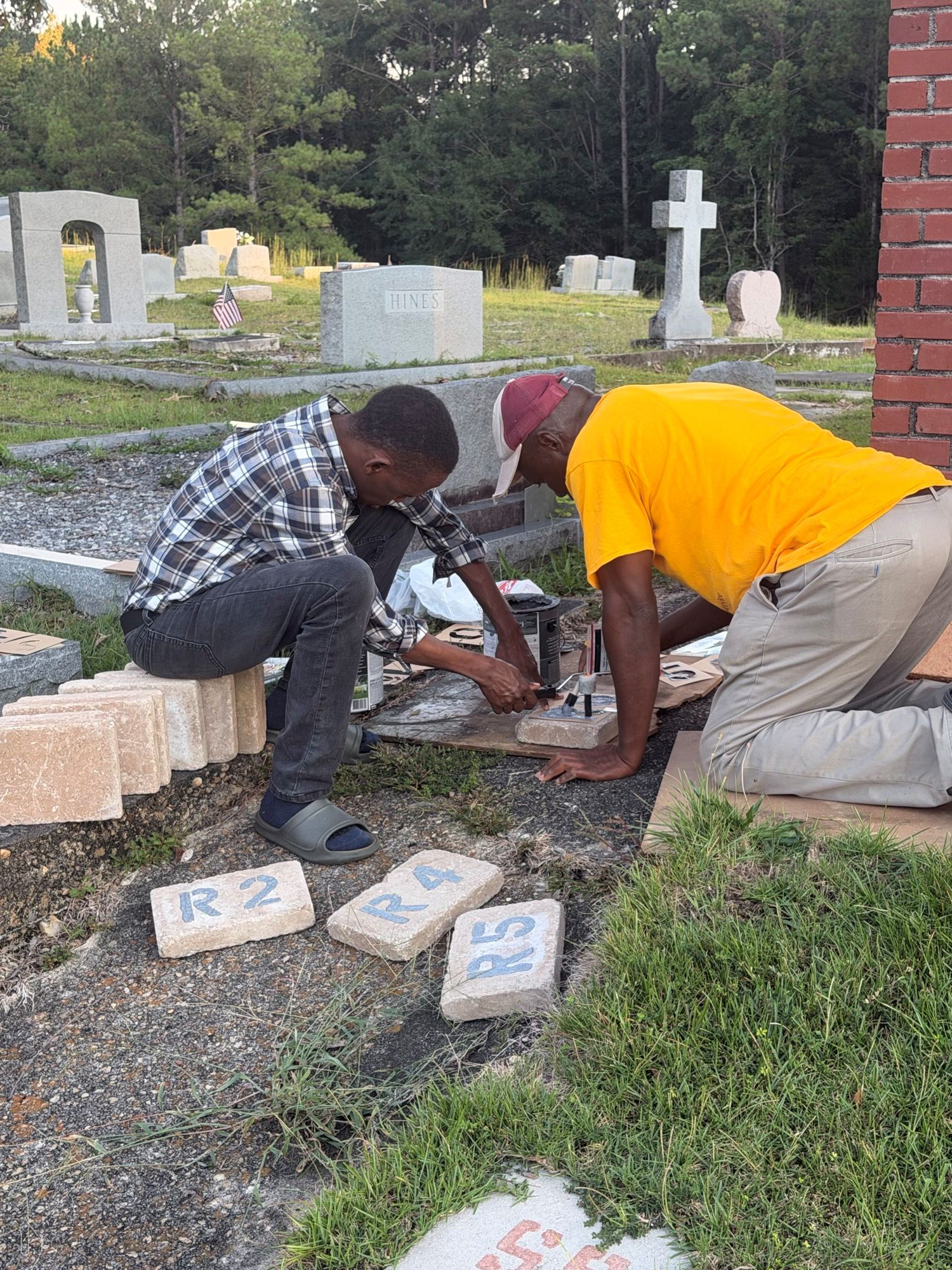
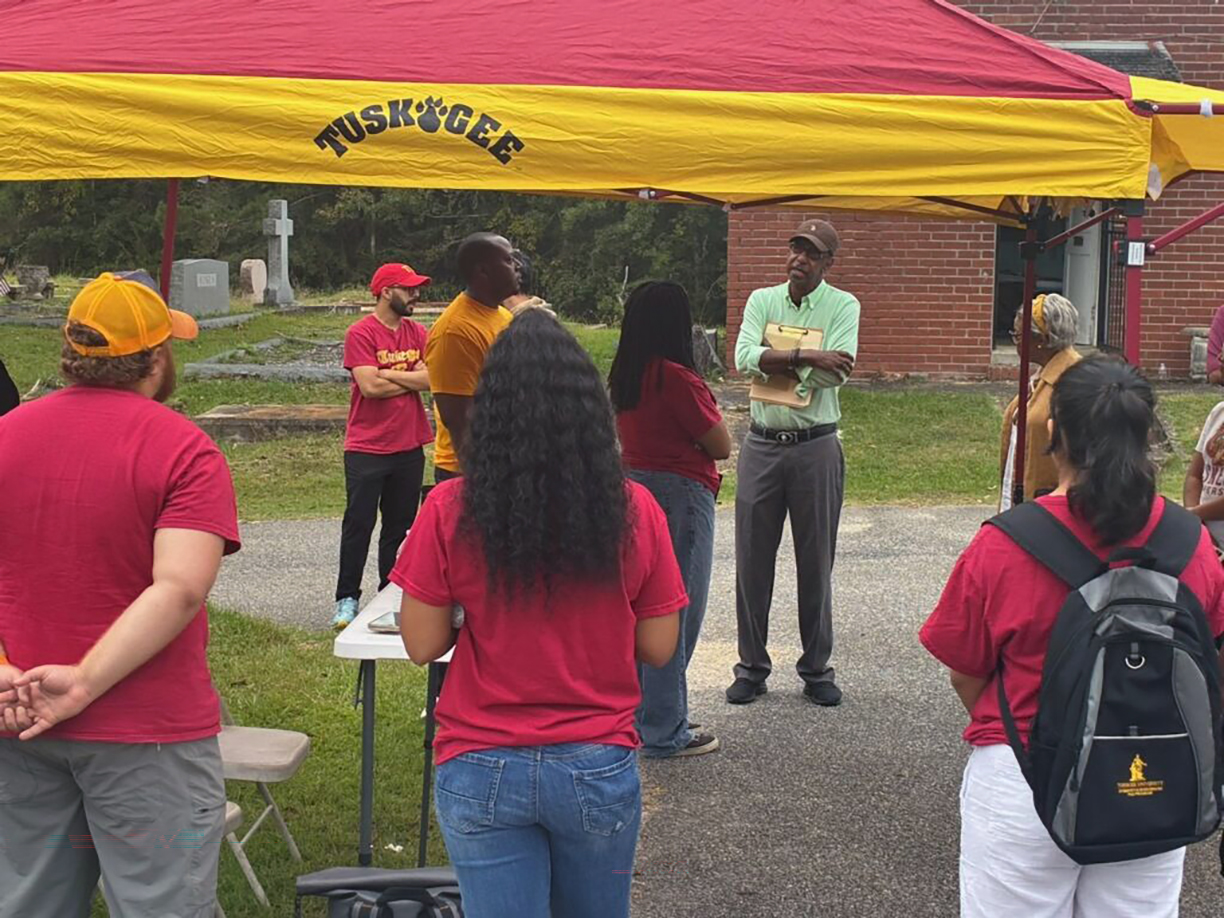
Working in partnership with the Greenwood Cemetery Foundation, IBS students spent the day reviewing and updating records, verifying gravesite information, and supporting ongoing efforts to ensure the cemetery’s historical records remain accurate, accessible, and preserved for future generations.
The graduate program prepares doctoral scholars through interdisciplinary research, scientific innovation, and community engagement to apply research skills to address real-world challenges while contributing to the preservation of cultural and historical resources.
“In joining my colleagues in the IBS program to maintain the Greenwood Cemetery and preserve the stories of those buried there, we acknowledge that these lives mattered, and their legacies will not be forgotten,” said Dorcas Kodie, a third-year IBS Ph.D. Fellow from the Greater Accra Region, Ghana.
The service project reflects a longstanding partnership between the IBS Ph.D. Program and the Greenwood Cemetery Foundation that combines research, community engagement, and historic preservation.
“Today is an opportunity for us to honor the past, preserve hallowed ground and give hands-on care to this sacred space so that others might benefit from tangible evidence of Tuskegee’s legacy,” said Shacoya Mack, a second-year Integrative Biosciences Ph.D. student from Union Springs, Alabama.
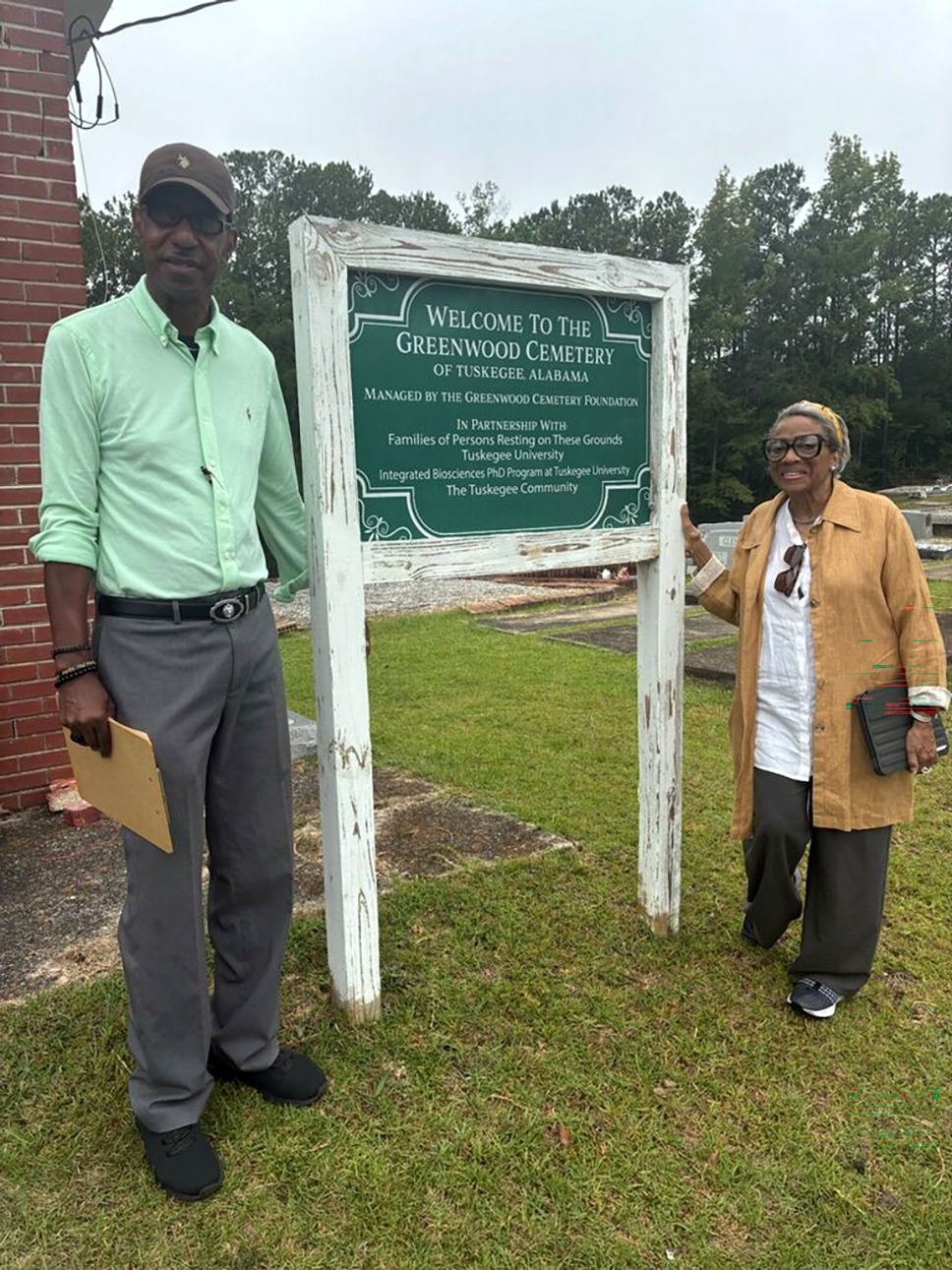
As one of the region’s oldest burial grounds, Greenwood Cemetery serves as the final resting place for generations of families, educators, civic leaders, students, Tuskegee faculty and administrator and members of the legendary Tuskegee Airmen. More than 20 people born into slavery are buried on its grounds The cemetery remains a vital repository of local and national history.
“As an international student, it gave me a valuable opportunity to better understand American culture, connect with the local community, and appreciate the historical relationship between Tuskegee University and the people of Tuskegee,” said Asmaa Elrefaey, a third-year IBS Ph.D. Fellow from Menouf-Menoufia Governorate, Egypt.
For Dr. Deloris Alexander, Dean of the Graduate School and Director of the Integrative Biosciences Ph.D. Program, the initiative reflects Tuskegee University’s distinctive role as vital connective tissue between the past, present and future, and between academia and the community.
“As both an academic institution and a cultural steward, this project creates access in a particularly perilous landscape where accurate history is swiftly eroding. Every gravesite tells a story, and preserving those stories is an important responsibility,” said Dr. Alexander, a native of Tuskegee whose parents, both first-generation Tuskegee alumni, are buried at Greenwood Cemetery.
For more than a decade, students in the IBS Ph.D. Program have partnered with the Greenwood Cemetery Foundation on the preservation initiative. Since 2015, hundreds of students have contributed to the long-term cemetery documentation effort.
The project began with an extensive survey of the nearly six-acre cemetery. Student researchers divided Greenwood Cemetery into 16 sections and identified 158 rows throughout the property. They documented open burial spaces and collected detailed information from individual gravesites, including names, locations, birth and death dates, age at death, and military service affiliations when applicable.
The resulting digital database, supported by detailed Excel-based mapping grids, has become an invaluable management and preservation tool. It enables cemetery caretakers to track occupied and available burial plots while preserving historical records of those interred at Greenwood.
Today, Greenwood Cemetery is approaching capacity, with officials estimating that fewer than 100 burial plots remain available. The limited space has prompted discussions regarding a potential expansion through the acquisition of an adjacent 5.6-acre wooded tract located between Greenwood Cemetery and Lewis Adams Elementary School.
IBS student researchers have contributed to those conversations through studies examining the site’s soil conditions and topography. Their findings indicate that while portions of the property are prone to sinkhole activity, the land remains suitable for expansion. Sensitive areas could potentially be designated for conservation and beautification purposes.
Members of the Greenwood Cemetery Foundation continue to advocate for preservation and expansion efforts.
“This sacred place is more than a cemetery,” said Barbara Dunn Harrington, a member of the Foundation’s leadership team. “It is a living record of the people who built Tuskegee. Through service, research, and community partnership, we are preserving a shared legacy that must be remembered, properly honored, and valued as a vital source of learning.”
© 2026 Tuskegee University