Contact: Anissa Riley, College of Veterinary Medicine
As technologies such as artificial intelligence, geographic information systems (GIS), and advanced disease surveillance continue to transform healthcare and research, Tuskegee University remains committed to preparing the next generation of One Health leaders. This commitment aligns closely with the American Veterinary Medical Association’s (AVMA) One Health initiative, which recognizes the interconnectedness of human, animal, and environmental health.
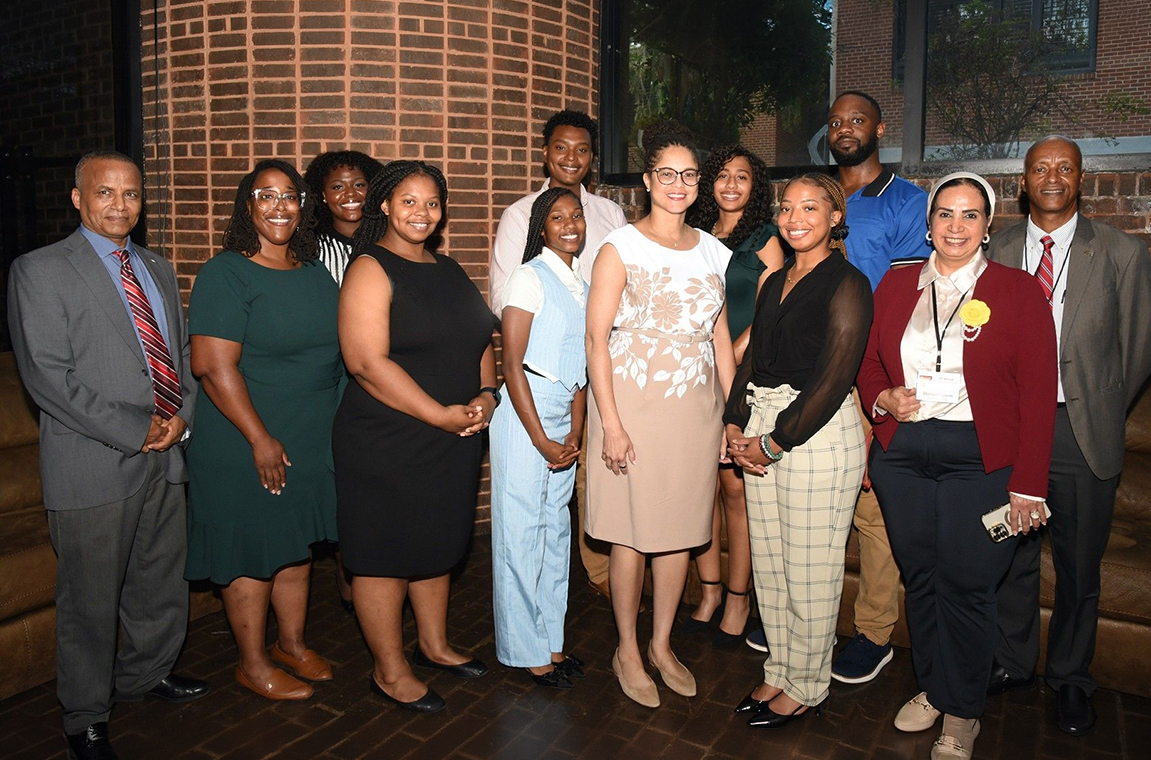
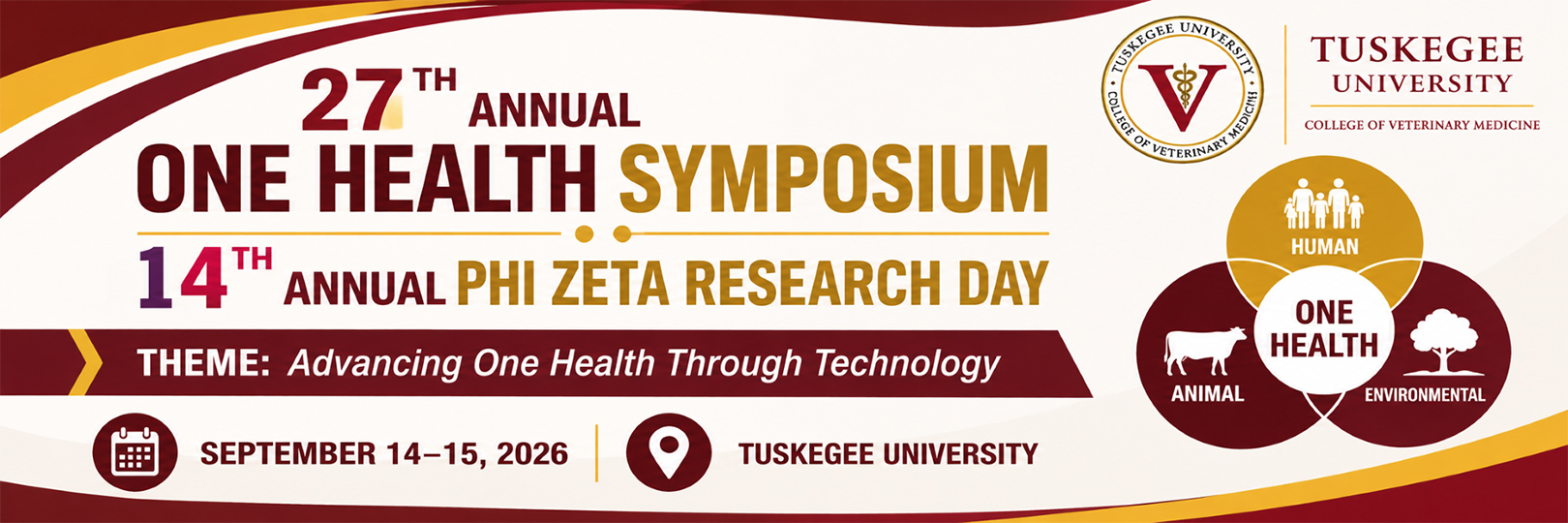
The Tuskegee University College of Veterinary Medicine recently hosted its 27th Annual One Health Symposium and 14th Annual Phi Zeta Research Day under the theme, “Advancing One Health Through Technology.” The event brought together students, faculty, researchers, veterinarians, public health professionals, and community partners to explore how emerging technologies are transforming disease prevention, surveillance, research, and healthcare delivery.
“As technology continues to evolve, it is reshaping the way we address complex health challenges,” said Dr. Ebony Gilbreath, dean of the Tuskegee University College of Veterinary Medicine (TUCVM). “Several presentations highlighted how artificial intelligence is enhancing veterinary medicine, public health, biomedical research, environmental health, and human healthcare, creating new opportunities for innovation and collaboration.”
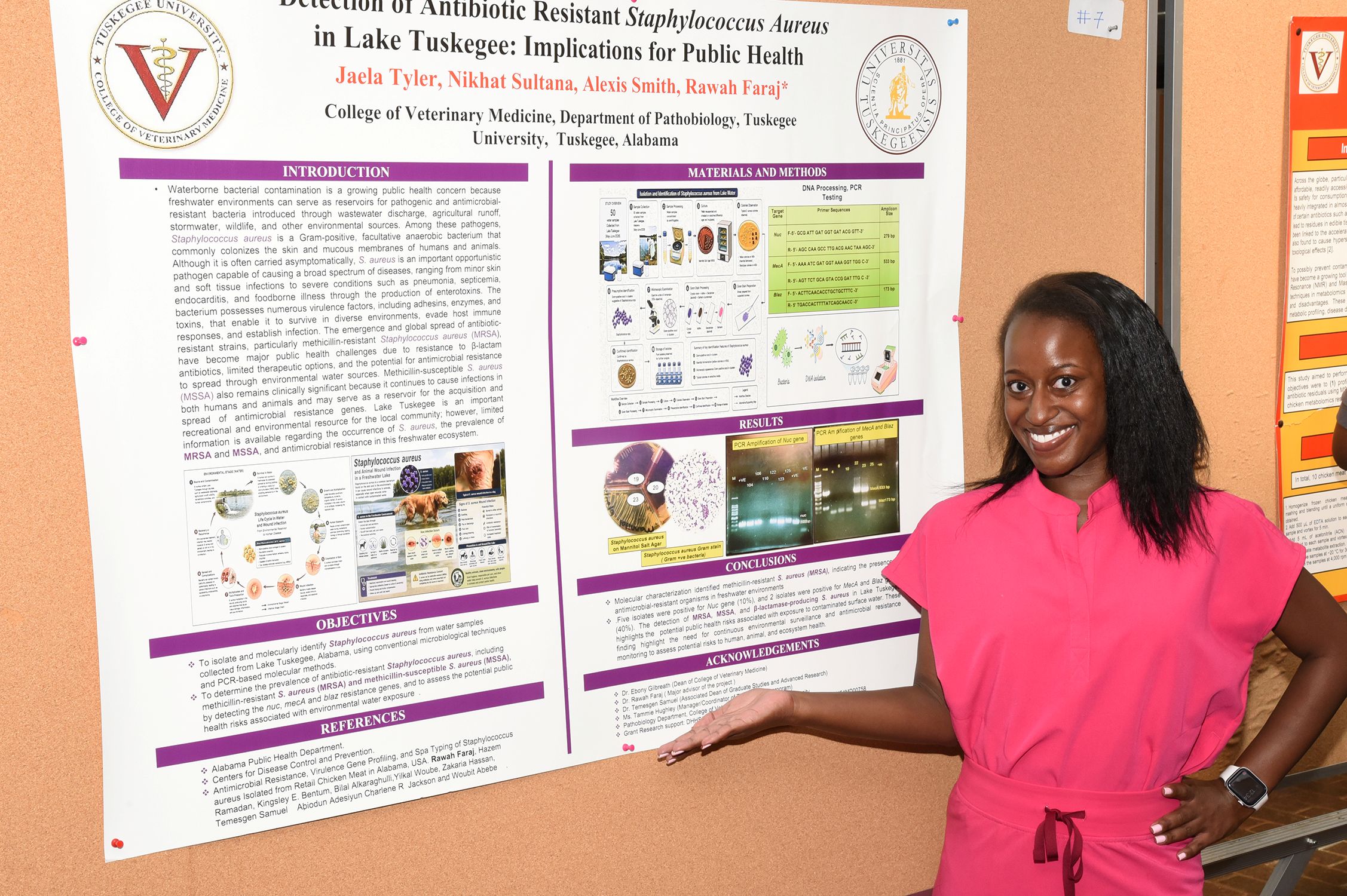
Throughout the symposium, researchers presented studies addressing some of the most pressing health challenges facing Alabama and beyond. Presentations included surveillance of tick-borne Rickettsia across Alabama, environmental monitoring of norovirus in vegetables, wastewater, and stagnant water sources, and metagenomic analyses of antibiotic resistance genes in Lake Tuskegee. Together, these studies emphasized the importance of data-driven surveillance and research in identifying and responding to emerging threats before they become widespread public health concerns.
A featured presentation by epidemiologists from the Alabama Department of Public Health examined the relationship between disease patterns, environmental factors, and community health through the lens of One Health. Using data on West Nile virus transmission from 2015 through 2024, researchers explored differences between rural and urban counties and assessed how climate and environmental conditions influence disease spread. Presenters also demonstrated an interactive ArcGIS StoryMap that integrates disease surveillance data, environmental information, and research findings to help health professionals, policymakers, and communities better understand disease risks.
Another important focus of the symposium was expanding healthcare access in rural and underserved communities. During the Tele(Mental) Health and Community Session, panelists discussed strategies for reducing health disparities caused by geographic isolation, limited healthcare access, and chronic disease burdens. Speakers highlighted community-centered models that connect local healthcare workers with remote specialists, helping to strengthen trust, improve digital literacy, and increase access to technology-based health services.
The symposium’s second day featured a keynote address from Dr. Michael Q. Bailey, TUCVM alumnus and immediate past president of the AVMA. His presentation, “One Health in Action: The Essential Role of Veterinarians and Veterinary Teams as One Health Caregivers,” emphasized the critical role veterinarians play in public health, food safety, disease prevention, environmental stewardship, and global health initiatives.
Held alongside the symposium, the 14th Annual Phi Zeta Research Day showcased outstanding student scholarship through oral and poster presentations. Khadijah Muhammad, a second-year veterinary student, from Atlanta, Georgia, earned first place in the poster competition for research investigating cross-species anti-tick vaccines that could help reduce tick-borne disease risks in animals and humans. Deheaven Angeletti, also a second-year veterinary student, from Gardena, California, received first place in the oral presentation competition for research focused on investigating mastitis, one of the dairy industry’s most significant infectious diseases, to improve diagnosis, management and animal welfare.
Support for the 2026 One Health Symposium and Phi Zeta Research Day was provided by the Centers for Disease Control and Prevention, the U.S. Department of Education, Boehringer Ingelheim, Zoetis, and Purina.
The annual symposium reflects Tuskegee University’s continued investment in biomedical research, innovation, and student success. By bringing together experts from academia, government, industry, and local communities, the event serves as a catalyst for developing collaborative solutions to complex health challenges. TUCVM continues to advance Tuskegee University’s mission of improving health outcomes locally, nationally, and globally through the One Health approach.
© 2026 Tuskegee University