Contact: Crystal Drake, Office of Strategic Communications
The Tuskegee University community will celebrate the extraordinary and lasting legacy of
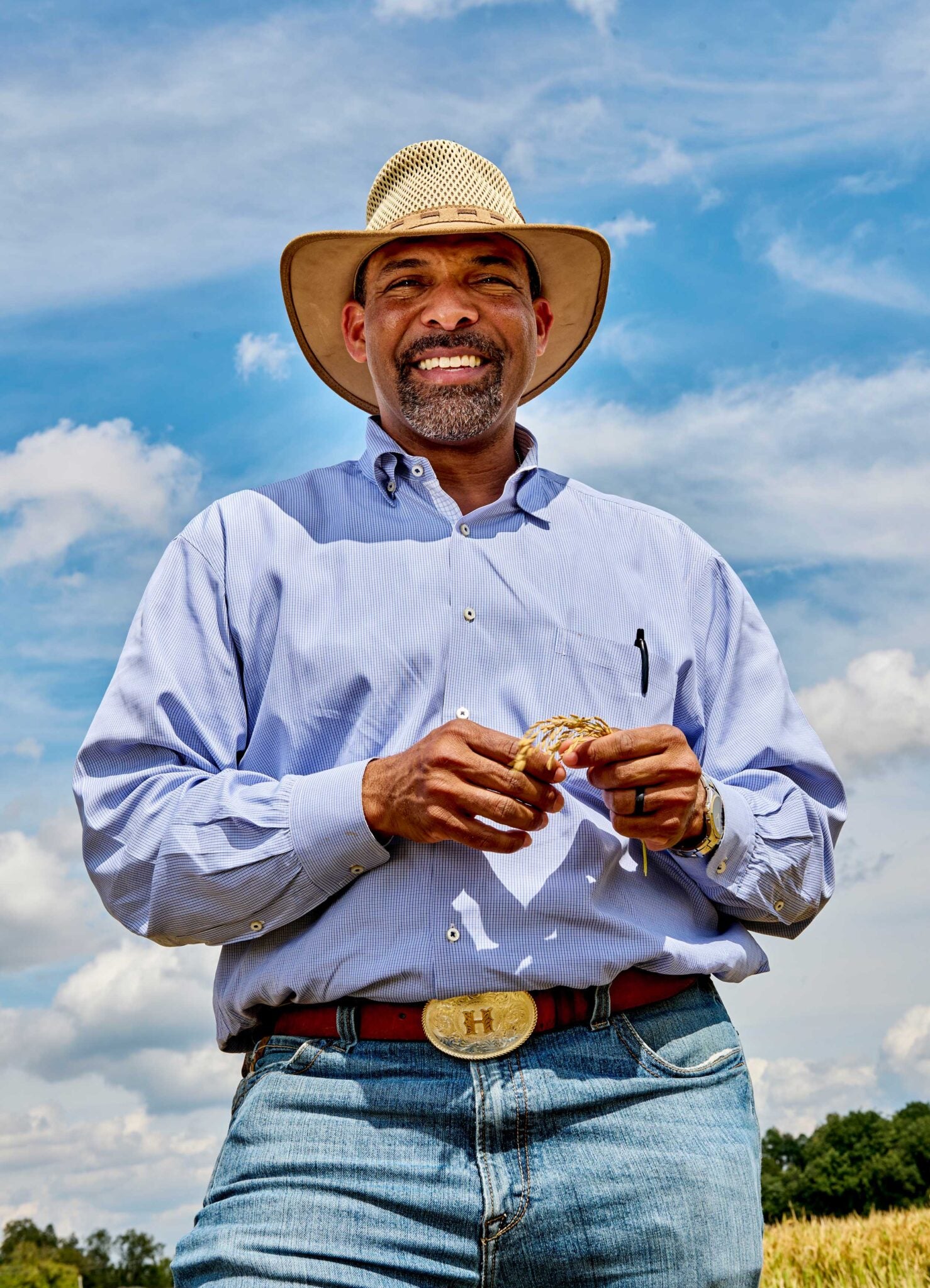
George Washington Carver, welcoming keynote speaker P.J. Haynie, during the 25th annual convocation in his honor on Friday, Feb. 6.
“One of our nation’s greatest scientists, Dr. Carver revolutionized agricultural science and transformed the economy of the Southern U.S. through his pioneering crop rotation research,” said Dr. Mark A. Brown, President and CEO. “His vision, tenacity and compassion for farmers and all working people lives on in scientific innovation we continue to provide the world at Tuskegee University.”
Haynie is a fifth-generation row-crop farmer and entrepreneur and one of less than 10,000 Black, row-crop farmers in the U.S. today. After graduating from Virginia Tech in 1999, Haynie returned to his family's row-crop farm in Virginia, which has grown soybeans, wheat, corn, barley, canola and more since 1867. His great-great-grandfather, Rev. Robert Haynie, was one of the first formerly enslaved people in Northumberland County to purchase land.
Haynie currently owns and operates Haynie Farms, LLC, a grain farming business, producing corn, wheat, soybeans and canola and more throughout all four counties of the Northern Neck of Virginia. Haynie overseas the family's farming operation in Arkansas covering four counties across the Arkansas Delta while his father manages the Virginia operation.
Haynie introduced rice into the Arkansas farming rotation in 2022 and in that year became co-owner of the first Black-owned, food-grade certified rice mill in the U.S., located in the Arkansas Delta region in Pine Bluff, Arkansas.
In 2022, Haynie was appointed by President Biden as a member of the first USDA Equity Commission. Previously, Haynie served on USDA's Plant Variety Protection Act Board and on the Agricultural Advisory Council for Virginia's first congressional district.
George Washington Carver served as the first Director of the Agricultural Department at Tuskegee Institute, remaining in the role 47 years until his death in 1943.
Born into slavery in Missouri, Carver studied at Simpson College and Iowa State Agricultural College (now Iowa State University), and was hired by the school as the first Black faculty member while completing his Master’s degree. When he completed the degree in 1896, Booker T. Washington hired Carver to head the newly created Agriculture Department at Tuskegee Institute. From 1915 to 1923, Carver concentrated on researching and experimenting with new uses for peanuts, sweet potatoes, soybeans, pecans, and other crops, seeking to assist Black farmers through the development of new products derived from these crops to transform the declining agricultural economy of the South following the Civil War. In 1916, Carver was made a member of the Royal Society of Arts in London, one of only a handful of Americans at that time to receive this honor. His experimental work was primarily conducted in Milbank Hall on the Tuskegee campus. Later, his final laboratory was located within the Carver Museum, where elements of his research remain on display today.
© 2026 Tuskegee University