College of Agriculture, Environment and Nutrition Sciences (CAENS)

Forestry, Wildlife and Fisheries

Program Overview

History
Statement of Purpose
Partner / Schools Credits
Contact us

History

Under the direction and vision of Dr. B.D. Mayberry, the Tuskegee University two-plus-two Pre-Forestry (later Natural Resources) Program was founded in partnership with the U.S. Forest Service and Michigan University. Initially, the program was designed for students to complete their fundamental studies at Tuskegee and transfer to Michigan State University in the final two years. Later, students would stay on for a professional master’s degree, thus an additional year was added to the program. Over the years, partner institutions have included Yale, Duke, Mississippi State University, Colorado State University, Oregon State University, Auburn University, University of Florida, North Carolina State University and a plethora of others. Today, the degree is multifaceted, intentionally aligning environmental stewardship and agriculture, providing students with numerous degree options that can be completed at TU in four years, in addition to the Forestry, Wildlife and Fisheries Program, which is a continuation of Dr. Mayberry's efforts, with students completing their BS degree in forestry, wildlife and fisheries in collaboration with a partner institution.

Today, the Forestry, Wildlife and Fisheries Program (3+1+1) has many partner universities, and the program continues to train the next generation of natural resource research scientists. Students spend three years at Tuskegee University before transferring to an SAF accredited host university for their senior year and later graduate studies. Approximately 90% of our program undergraduates continue to pursue professional or graduate degrees at the partnering institutions with the remaining students placed into jobs within the industry.

Environmental, Natural Resource and Plant Sciences | Forestry, Wildlife and Fisheries curriculum sheets | Minors

Our Purpose

The Tuskegee University Forestry, Wildlife and Fisheries program's mission is to develop and empower the next generation of leaders in forest ecology and natural resource management. We provide a comprehensive foundation in natural resource management studies, scientific research, and cultural perspectives - preparing students to address the complex environmental challenges of the 21st century. 

Thank you!

Students will complete 24 credit hours in the senior year at a host university.

partners
Mississippi State University
Wildlife / Forestry
Colorado State University
Wildlife / Forestry
North Carolina State University
Forestry

Michigan Technological University
Michigan Technical University 
Wildlife / Forestry (In Process)

University of Florida
Wildlife / Forestry (Renewal)
 

Get in Touch

Contact Information

The Forestry, Wildlife and Fisheries (FWF) Program is supported by a dedicated team of program directors, faculty, and staff committed to student success, experiential learning, and professional development. Our team provides academic guidance, research mentorship, and career preparation to equip students for leadership in natural resources and environmental sciences.

Program Directors, Faculty, & Staff — Forestry, Wildlife and Fisheries Program

contact staff
Ronald Smith
Ronald Smith, M.S.
Forester, Co-Director of Forestry, Wildlife and Fisheries Program
102 Morrison-Mayberry Hall
Phone: (334) 724-8454
Email: rsmith@tuskegee.edu
Rashidah Farid-Tilghman
Rashidah Farid-Tilghman, Ph.D.
Asst. Professor of Wildlife Ecology, Co-Director of Forestry, Wildlife and Fisheries Program
103 Morrison-Mayberry Hall
Phone: (334) 727-8625
Email: rfarid@tuskegee.edu
Website: rashidahfarid.weebly.com
Deja Perkins
Deja Perkins, Ph.D.
Asst. Professor of Forestry
208 Morrison-Mayberry Hall
Phone: 334-727-8842
Email: dperkins2@tuskegee.edu
Ashley Wiseman
Ashley Wiseman, M.S.
FWF Program Manager, Student Experiential Learning
200 Morrison-Mayberry Hall
Phone: (334) 727-8625
Email: awiseman@tuskegee.edu
Brianna Smith
Brianna Smith, Ph.D.
FWF Post Doctoral Associate, Adjunct Faculty
Natural Resource Scholars Program Coordinator
200 Morrison-Mayberry Hall
Phone: (334) 727-8625
Email: bsmith@tuskegee.edu
 

For additional information about experiential learning, wildfire training opportunities, and student engagement initiatives, please visit the 1890 Forestry Wildland Fire Consortium page.

Visit 1890 Agroforestry Consortium


After successful completion of the program, students will exceed the following learning outcomes: 


Forestry Option Learning Outcomes

  1. Demonstrate skills using geospatial analysis, remote sensing, GIS, mapping, and the ability to forecast succession development over time using forest growth models.
  2. Demonstrate knowledge of forest ecology and conservation, and forest management.
  3. Demonstrate effective verbal and writing communication skills for professional and public audiences for natural resource planning and consulting practice.
  4. Demonstrate effective stakeholder analysis across multicultural perspectives.
  5. Demonstrate understanding of landscape-level ecosystem interactions of vegetation, wildlife, insects, and disease within forests.
  6. Demonstrate ability to identify (species level) and classify major forest ecosystems of the Southeast, with and without human influence/management.
  7. Demonstrate an understanding of current policies, laws, and regulations governing the management of forest lands, within the social and political context of forestry.

Wildlife & Fisheries Option Learning Outcomes

  1. Demonstrate an understanding of landscape-level biological and ecological principles that govern wildlife and fish populations, including species interactions, habitat requirements, and ecosystem dynamics.
  2. Demonstrate ability to identify (species level) and classify important native vegetation, wildlife, insects, and disease within ecosystems of the Southeast.
  3. Demonstrate an understanding of current policies, laws, and regulations governing the management of natural resources, within a dynamic social, cultural, and political context.
  4. Demonstrate skills using remote sensing and GIS/mapping.
  5. Demonstrate knowledge of forest ecology and conservation, and forest management.
  6. Demonstrate effective verbal and writing communication skills for professional and public audiences for natural resource planning and consulting practice.
  7. Demonstrate effective stakeholder analysis across multicultural perspectives.

Upcoming Events

View All Events

More Information

Forest Field Training & Research

Forests, Field Sites & Research Opportunities

Tuskegee University owns over 5,000 acres of forest land within 15 miles of campus. Forestry students have the opportunity to learn beneath the canopy of long leaf pine, oak-hickory bottoms, and short leaf pine forests. Additionally, the USDA Forest Service (Southern Research Station) has provided indispensable support since the inception of the Forestry Program in 1968. Today, the U.S. Forest Service continues to support the field training of pre-professional foresters by funding research and demonstration sites.

USDA and U.S. Forest Service logos side by side.


TU Russell Experimental Forest

Formally known as Russell Plantation, TU Experimental Forest boasts over 1700 areas diverse ecosystems, including 600 acres of hardwood wetlands. Tuskegee University Experimental and Demonstration Forest is a full partner in conducting natural resource research, Sustainable Forest Management for Limited Resource Landowners, in partnership with USFS Southern Research Station.  The goal of this partnering is to provide a mechanism to support research, education, and outreach that enhances our understanding of forest management alternatives in the greater Macon County, AL area while educating future generations of natural resource managers and scientists. Further, the goal is to fully engage TU faculty, staff, and students in research, education, and outreach as a mechanism to further our understanding of forest management and watershed science for limited resource landowners in the Southern Region.


Camp Atkins

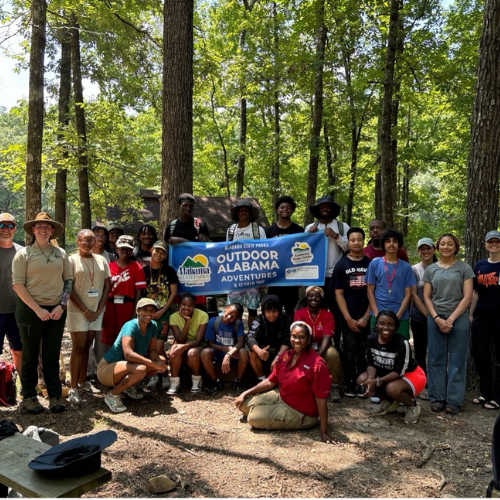
Camp Atkins Ecological Research & Recreation Institute is a 200-acre outdoor field station dedicated to advancing ecological research, environmental education, and community-based recreation across two distinct forest systems: a long leaf pine ecosystem and a hickory-oak dominated upland forest.

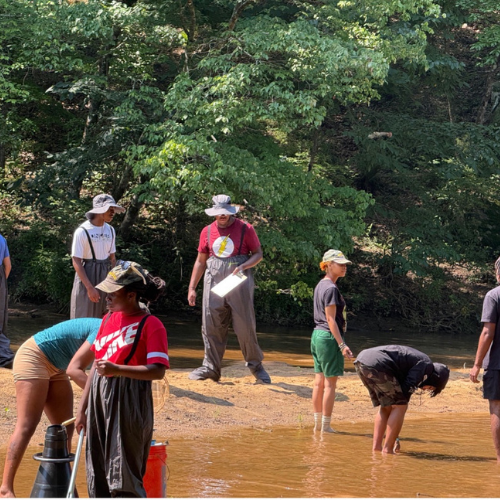
As a living laboratory, Camp Atkins provides immersive, hands-on science experiences where K–12 students, university scholars, educators, and community members engage in field research, citizen monitoring, and place-based learning. Instruction integrates forest ecology, wildlife biology, watershed systems, and conservation practice.

Camp Atkins holds deep historical significance. Prior to integration in 1974, it was the only Black Boy Scout camp in the South. The original Carver Chapter established one of the first troops for Black scouts in the region around 1908, serving as the heart of Camp Atkins. Later, the camp welcomed Black troops from across the South at a time when outdoor recreation opportunities for Black youth were limited.

Today, Camp Atkins is recognized as Tuskegee University’s Teaching Forest. Located within the university’s protective boundary, the camp’s long leaf pine and upland hardwood forests continue to provide exceptional opportunities for outdoor education and field instruction.

Forestry student courses and labs historically taught at Camp Atkins include:

  • Introduction to Forestry
  • Dendrology
  • Forest Mensuration (Measurements)
  • Silviculture

Tuskegee University seeks to redevelop historic Camp Atkins into a center for education, historical preservation, and recreation to create expanded opportunities for underserved minority communities.

In partnership with the Long leaf Alliance and Georgia Wildlife Federation, the Camp Atkins Conservation Park and Education Center will be established to preserve cultural heritage, protect wildlife and ecological systems, and promote public recreation and education.
The Longleaf Alliance logo with stylized longleaf pine needles above two hands.Georgia Wildlife Federation logo with a green circular deer emblem above the organization name.

Project Aims:

  • Habitat Enhancements: Creation of walking and biking trails, wildlife viewing blinds, and habitat improvements for wood ducks and migratory waterfowl.
  • Rehabilitation of Structures: Renovation of facilities to include indoor classrooms, specimen preservation labs, restrooms, showers, camping storage, kitchen areas, and restoration of outdoor camping infrastructure.
  • Historical Preservation & Recreation: Development of exhibit panels and lecture series archiving the historical and current contributions of minorities in natural resources.

Wildlife Mississippi Grant (NRSC Funded, Spring 2025–2029)

Tuskegee University proudly announces the launch of the Tuskegee University Natural Resource Scholars Program (TUNRSP), a transformative initiative funded by Wildlife Mississippi with $2,000,000 in support from 2025 to 2029. This program is designed to expand diversity in the natural resource sciences by recruiting and training underrepresented students in areas such as forestry, wildlife ecology, and environmental science. Building on Tuskegee’s legacy as a leader in agricultural and environmental education, TUNRSP addresses long-standing barriers to minority participation through a model that integrates academic excellence, experiential learning, and professional development. Students will engage in interdisciplinary coursework, service-learning in Alabama’s Black Belt counties, and research experiences that prepare them for graduate education and leadership in conservation.

Beginning in their freshman year, selected TUNRSP scholars will receive financial support and academic guidance throughout a four-year training pathway. Students will major in Environmental, Natural Resource, and Plant Sciences, participate in hands-on fieldwork, and receive mentorship from faculty and industry professionals. The program includes articulation agreements with institutions such as Mississippi State University, North Carolina State University, and the University of Florida, offering opportunities for dual-degree completion and advanced study. Scholars will also engage in public outreach, service projects, and present their research at national conferences.

Program Highlights:

  • Scholarships: Tuition support, academic assistance, conference funding, internships, and personalized mentoring.
  • Study Abroad – Tanzania: International coursework in African Wildlife Ecology, conservation, and human-wildlife conflict.
  • Field Courses & Training: Summer field camps, GIS training, silviculture, forest mensuration, and environmental sampling.

Through the generous support of Wildlife Mississippi, TUNRSP builds a dynamic pipeline of future leaders in environmental stewardship and sustainable resource management.

Contact: Dr. Brianna Smith | Dr. R. Farid


Urban Forestry Grant (USFS Funded, Fall 2024–2028) (Under reinstatement review)

Tuskegee University CAENS and the Tuskegee University Cooperative Extension Program (TUCEP) have developed an innovative rural community conservation education model.

The Black Belt Arboretum Project will establish urban forests and edible gardens across the Black Belt region to enhance climate resilience, biodiversity, environmental education, and community health.

Arboretum demonstration sites will host workshops in:

  • Organic farming
  • Regenerative and sustainable agriculture
  • Forest succession
  • Water management
  • Biodiversity and conservation
  • Climate-smart practices
Student Opportunities

Experimental/Experiential Opportunities

Back to CAENS Scholarships

The Forestry, Wildlife and Fisheries Program provides experiential learning opportunities designed to enhance student success through field training, immersive career experiences, certifications, and professional development.


1890s Wildland Fire Consortium (Funded by USFS) (Under reinstatement review)

Wildland Fire Training 

Year-long Student Wildfire and Prescribed Burning Training

Recipients of the proposed training will be employed via partnering programs such as Greening Youth Foundation and MANRRS for summer employment and receive a $3,600 stipend during the academic year for tuition support.

Recipients will receive hands-on experience and certification opportunities (red card), including required training (FIF-100, I-100, S-190, S-130, L-180, G-130, chainsaw, first aid, etc.) for forest fire employment.

  • Forestry and natural resources students are encouraged to apply
  • Applications open in September of each Fall semester

More Information: 1890forestryconsor.wixsite.com/fire
Contact: rfarid@tuskegee.edu


US National Park Service – Smoky Mountain & Acadia National Park(s) Experiential Experience

NPS Experience  

Smoky Mountains National Park Career Immersion Experience

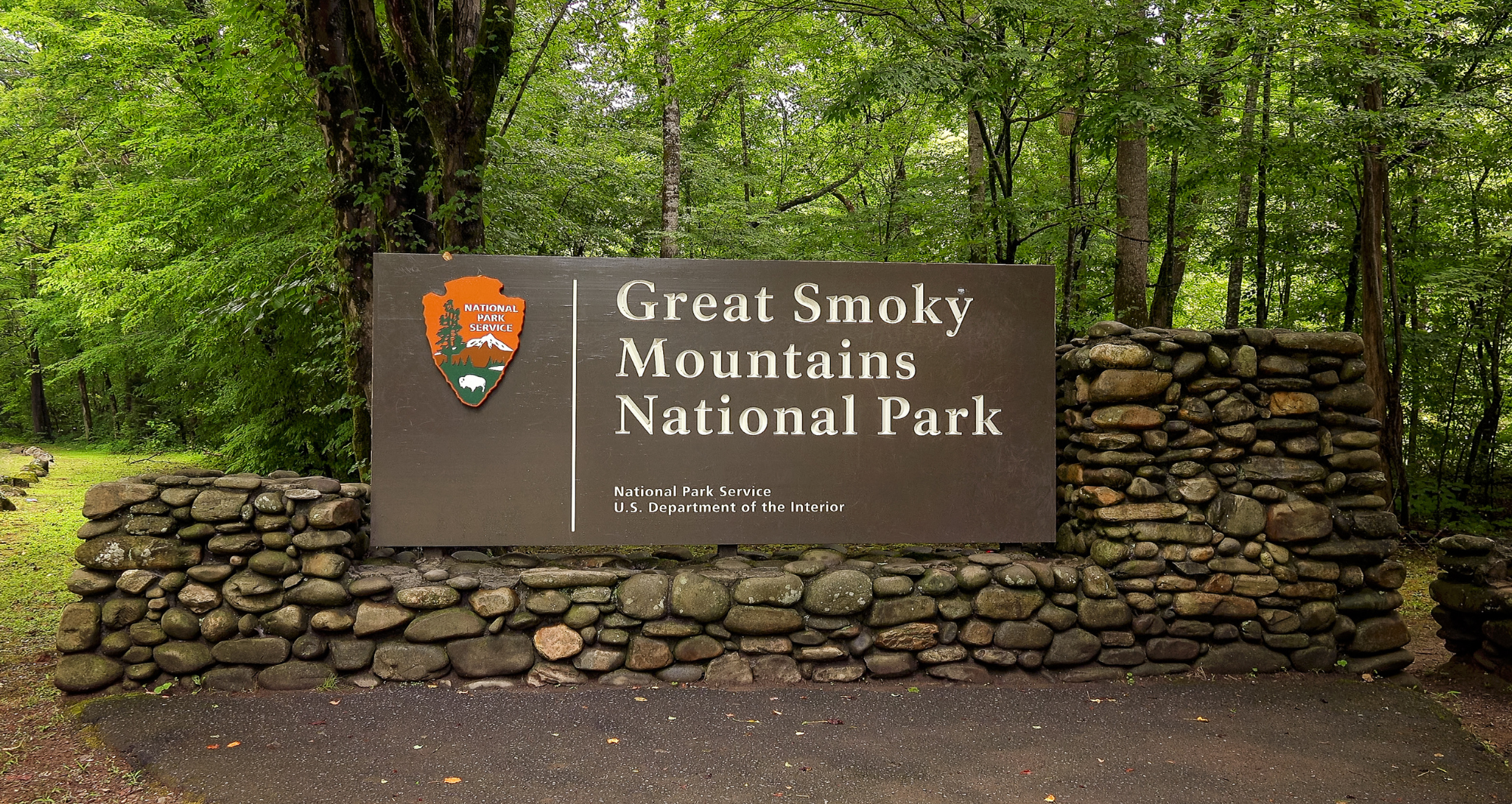
Location: Great Smoky Mountains National Park – Gatlinburg, Tennessee / Cherokee, North Carolina

Each spring, ten Tuskegee University students are selected to participate in an all-expenses-paid, week-long immersive experience in the Great Smoky Mountains National Park, the most visited national park in the United States.

Students engage in hands-on activities including wildlife tracking, fisheries research, trail maintenance, and cultural heritage preservation while shadowing park rangers and scientists.

Highlights include:

  • Wildlife monitoring in Cases Cove and Clingmans Dome
  • Fisheries and stream health assessments in Little River
  • Interpretive training at Oconaluftee Visitor Center
  • Cultural heritage workshops
  • Applications open each fall

Acadia National Park Career Immersion Experience

Location: Acadia National Park – Bar Harbor, Maine

Each fall, ten Tuskegee University students participate in a fully funded career immersion experience focused on coastal ecosystems, marine life, and cultural preservation.

Highlights include:

  • Coastal wildlife and bird migration monitoring
  • Marine ecology field sessions
  • Cultural history interpretation
  • GIS and conservation career workshops
  • Applications open each spring

For information contact: Ashley Wiseman


US Fish & Wildlife Service – Student / Bio-Blitz

The US Fish and Wildlife Service hosts the Annual Spring Student Blitz, connecting students with federal professionals and career development resources.

  • Learn about FWS careers
  • USAJOBS guidance
  • Federal resume enhancement
  • Occurs annually in February

Natural Resource Conservation Club (Hunt Club)

NRCC Activity NRCC                                     

The NRCC is open to all students and provides outdoor recreation, conservation training, and safety education.

  • The NRCC is open to any student. We also welcome faculty and staff participation. For more information contact – Tiffani Williams: twilliams1@tuskegee.edu;

  • Get ready for an action-packed adventure filled with outdoor exploration, skill-building, and camaraderie. Here's what you can expect:
  • Fly Fishing Workshop: Learn the art of fly fishing from seasoned experts. Discover the thrill of casting your line and reeling in your catch! After a successful fishing expedition, we'll teach you how to prepare and cook your freshly caught fish for a delicious outdoor feast.
  • Hiking & Exploration: Immerse yourself in the beauty of TU and federally protected lands as we embark on guided hikes and explore the natural wonders of the area.
  • Safe Firearm Training: Gain valuable knowledge and skills in firearm safety with guidance from experienced game wardens. Learn how to handle firearms responsibly in a controlled environment.
  • Deer and Duck Hunts: Learn for the very best. Students are instructed by experienced game wardens (one trainer – one student ratio) on private hunts. This program is led by Sgt. Bill Freeman, Alabama Department of Conservation Natural Resources, in collaboration with UGA Academic Afield Programming.
Contact: Tiffani Williams

Other Student Clubs and Professional Development

View CAENS Clubs


Pre-Collegiate Experience (FNR-TREK Summer Institute)

FNR-TREK Summer Institute FNR-TREK Activities

The Forestry & Natural Resources Tuskegee Research Enrichment Camp (FNR-TREK) Summer Institute is a two-week immersive experience for high school students interested in forestry, natural resources, and STEM fields.

For more information:
FNR-TREK Summer Program


Graduate Research Opportunities

Contact Information

Contact Information

Program Directors, Faculty, & Staff — Forestry, Wildlife and Fisheries Program


Ronald Smith
Ronald Smith, M.S.
Forester, Co-Director of Forestry, Wildlife and Fisheries Program
102 Morrison-Mayberry Hall
Phone: (334) 724-8454
Email: rsmith@tuskegee.edu


Rashidah Farid-Tilghman
Rashidah Farid-Tilghman, Ph.D.
Asst. Professor of Wildlife Ecology, Co-Director of Forestry, Wildlife and Fisheries Program
103 Morrison-Mayberry Hall
Phone: (334) 727-8625
Email: rfarid@tuskegee.edu
Website: rashidahfarid.weebly.com


Deja Perkins
Deja Perkins, Ph.D.
Asst. Professor of Forestry
208 Morrison-Mayberry Hall
Phone: 334-727-8842
Email: dperkins2@tuskegee.edu


Ashley Wiseman
Ashley Wiseman, M.S.
FWF Program Manager, Student Experiential Learning
200 Morrison-Mayberry Hall
Phone: (334) 727-8625
Email: awiseman@tuskegee.edu


Brianna Smith
Brianna Smith, Ph.D.
FWF Post Doctoral Associate, Adjunct Faculty
Natural Resource Scholars Program Coordinator
200 Morrison-Mayberry Hall
Phone: (334) 727-8625
Email: bsmith@tuskegee.edu